
Does Homeowners Insurance Cover Hoarding Cleanup in Ohio?
How homeowners, auto, and commercial insurance can cover hoarding and biohazard cleanup in Ohio, plus programs covering up to $1,000 and claim help.

The Short Answer
When searching for information on does insurance cover hoarding cleanup ohio residents usually find conflicting answers.
The short answer is frequently yes when biological hazards are present. Coverage depends entirely on the specific contaminants involved rather than the amount of clutter.
We see this confusion all the time with overwhelmed families who call our hoarding cleanup and biohazard remediation team in Cincinnati. Most people assume the entire bill falls on them, which delays critical intervention. They see a quote, assume it comes entirely out of pocket, and delay the work.
Our biohazard and trauma cleanup specialists frequently help clients secure coverage for the most expensive parts of these projects. The key is knowing what policies actually cover. Homeowners insurance biohazard clauses focus on sudden damage and specific biological risks.
What Carriers Actually Distinguish Between
Adjusters differentiate strictly between general property maintenance and sudden hazardous damage. Insurance policies do not contain a specific line item or exclusion for this disorder.
We regularly review standard HO-3 policies with clients to clarify this exact distinction. Removing piles of clothing or old newspapers counts as routine maintenance. That type of general cleanout is almost never covered by your carrier.
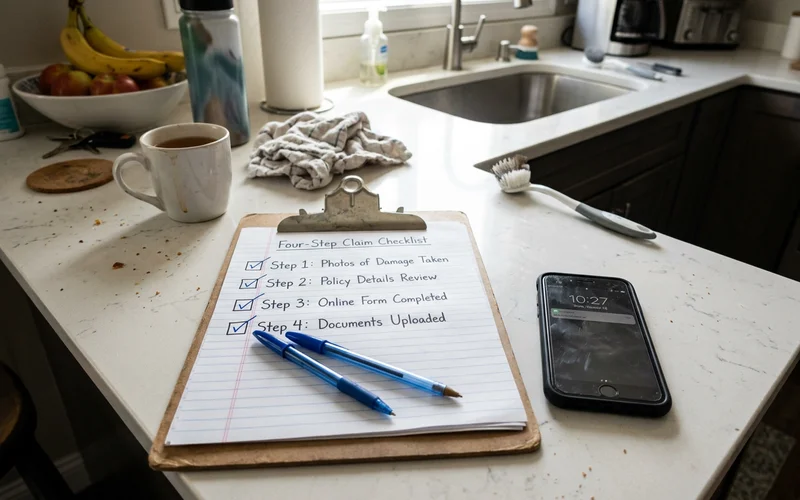
Our estimators must clearly separate the maintenance work from the hazard removal. Remediating a biological threat falls under property damage. This specific damage often includes:
- Unattended death resulting in decomposition
- Blood and bodily fluid contamination
- Raw sewage backups hidden under belongings
- Animal waste that has saturated subflooring
- Heavy mold growth caused by a covered water loss
A single Ohio property usually requires both services simultaneously. The cleanout portion might be paid out of pocket.
We ensure the remediation portion is properly documented as a legitimate claim. Proper documentation makes all the difference during the adjuster’s review.
Where Auto and Commercial Policies Apply
Commercial and auto policies routinely cover biohazard remediation following medical emergencies, accidents, or tenant damage. Standard comprehensive auto coverage typically includes sanitization after a trauma inside a vehicle.
We handle these commercial claims frequently for landlords across the state. Property managers often face severe biological contamination during a unit turnover. Ohio Revised Code 5321 requires landlords to maintain habitable premises, making quick professional cleanup a legal necessity.
Our teams help property owners maximize these specific commercial coverages. Many landlords have coverage for tenant-caused contamination but never think to use it. Filing a claim often saves the property from long-term vacancy losses.
Deductibles and the Honest Maths
Filing a claim makes mathematical sense when the cleanup costs significantly exceed your standard deductible. Most Ohio homeowners carry a deductible ranging from $1,000 to $2,500.
We always run these exact numbers with you before contacting a carrier. Claiming a small $4,000 project with a $2,500 deductible rarely justifies the potential increase in future premiums.
| Project Size | Estimated Cost | Deductible | Recommendation |
|---|---|---|---|
| Minor Cleanout | $4,000 | $2,500 | Pay Out of Pocket |
| Heavy Remediation | $18,000 | $2,500 | File a Claim |
A complex remediation involving structural tear-outs changes the calculation entirely. Heavy regulated waste disposal can push a project to $18,000 very quickly, and our guide on what to expect during a hoarding cleanup explains which parts of that scope an adjuster tends to question.
Our project managers will tell you clearly if a claim is not in your best financial interest. Flexible payment terms are available completely independent of insurance. Clients can start with a small credit card deposit while the remaining balance is billed later.
We ensure the work begins immediately without waiting on a final carrier decision.
Programs Beyond Insurance
Several state and local assistance programs can help offset cleanup costs if your insurance policy denies the claim. These alternative funding sources frequently cover expenses that traditional carriers exclude.
We guide eligible families toward specific victim assistance programs when applicable. The Ohio Attorney General Crime Victim Compensation Program provides critical financial help if the situation involves a specific crime or trauma. Local Area Agencies on Aging also periodically offer grant money to stabilize unsafe living environments for seniors.
Our staff can point you toward regional resources that provide up to $1,000 in dedicated cleaning assistance. These specialized programs are not widely advertised to the general public. Asking about available local grants costs absolutely nothing.
How We Handle the Claim Side
Adjusters require precise proof of the biological hazards, not just a flat-rate cleaning invoice. The documentation must prove a sudden loss occurred.
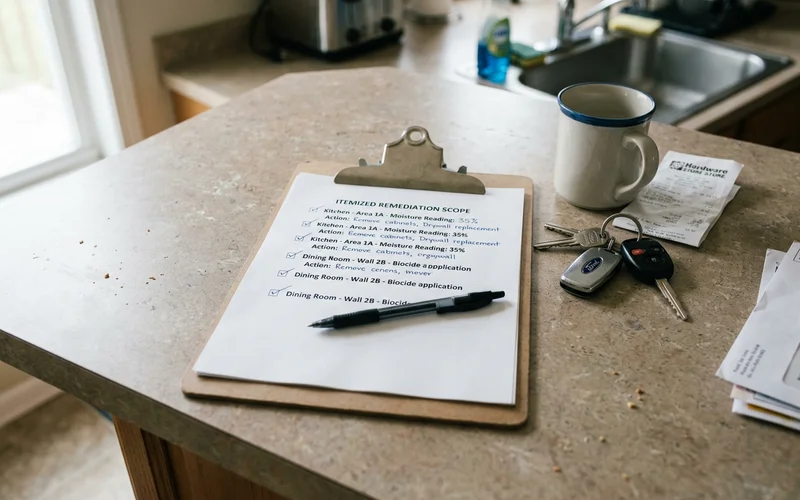
We manage the entire insurance conversation by submitting itemized, industry-standard documentation. Using specialized estimating software like Xactimate allows us to format the project scope exactly how your carrier wants to read it. This platform breaks down every single cost into approved line items.
Our final package includes several critical pieces of evidence:
- Photographic evidence of the hazardous materials
- Specific labor hours required for biological containment
- Disposal manifests from certified medical waste facilities
- Post-remediation verification results
A successful claim requires a highly detailed breakdown of events. That detailed visual record proves hazardous remediation took place instead of a simple trash removal service.
The most common reason claims fail
Not that the loss was uncovered. That the scope was written as a cleanout with a lump-sum price and no itemization of hazard controls. Framing is not a trick here, it is an accurate description of what was actually done.
What to Do Next
Start by locating your insurance declarations page and taking wide-angle photos of the affected rooms. Having this basic information ready speeds up the entire evaluation process.
We offer a completely free, confidential assessment of your specific situation. Calling a professional team allows you to understand your exact options safely. Honest advice about claim viability helps you make the best financial decision.
Our coordinators will gladly handle the initial carrier conversation on your behalf if you request it. None of this preliminary consultation costs anything. Finding reliable insurance hoarding cleanup assistance starts with a simple phone call, and you are never obligated to book the work.
Frequently Asked Questions
Will homeowners insurance pay for hoarding cleanup?
Do you help file the claim?
What if my claim is denied?
Is it worth filing if my deductible is high?
Related Guides
How to Help a Hoarding Parent or Loved One
A trauma-informed guide to helping a hoarding loved one without shame or conflict, covering how to approach, when to involve professionals, and respecting autonomy.
Recovering Valuables and Important Documents During a Cleanout
How we search for and recover cash, jewelry, documents, and keepsakes during a cleanout, categorized and returned to you, never blind junk removal.
The 5 Levels of Hoarding Explained
Understand the 5 levels of the Clutter-Hoarding Scale, what each level looks like, safety thresholds, and when to seek professional help.
What to Expect During a Hoarding Cleanup
From assessment to deep clean, see exactly what to expect during a hoarding cleanup, including discretion, timeline, sorting, and donation handling.
Talk it through with someone
There is no charge to ask a question, and no pressure attached to the answer. The helpline is answered 24 hours a day, every day of the year.