
How to Help a Hoarding Parent or Loved One
A trauma-informed guide to helping a hoarding loved one without shame or conflict, covering how to approach, when to involve professionals, and respecting autonomy.
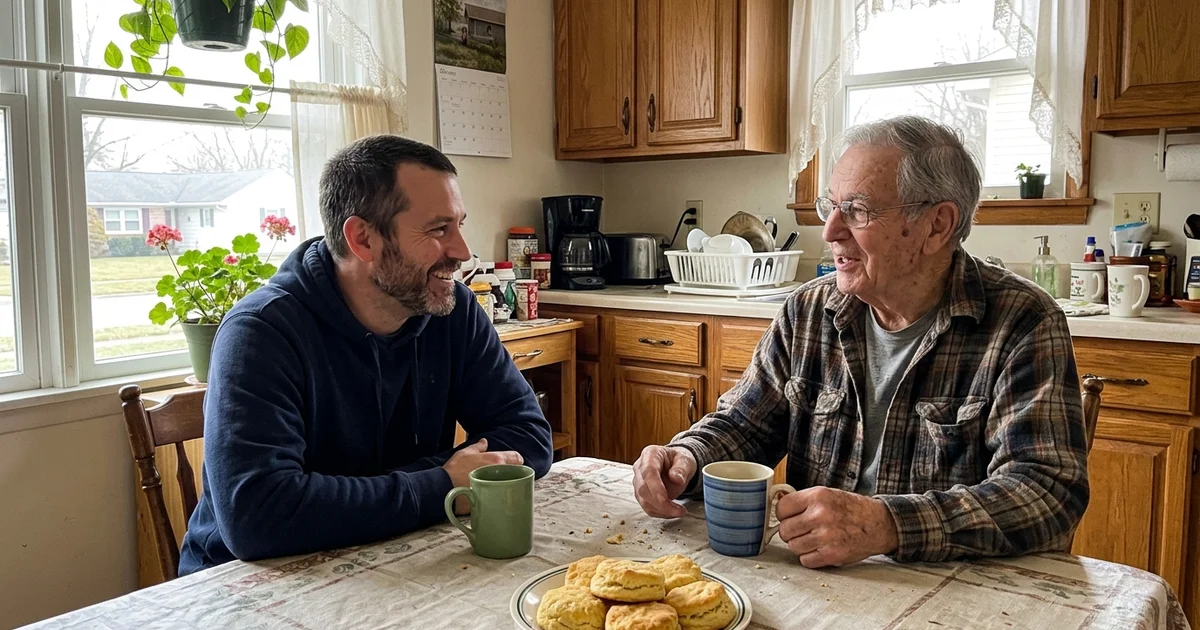
Start by Changing What You Think You Are Solving
The instinct is to solve the house when you are figuring out how to help a hoarder loved one. Almost every family arrives at this with a plan to clear it, fix it, and move on. That reaction makes perfect sense, yet it is exactly why so many attempts fail.
Hoarding disorder is a recognized mental health condition affecting roughly 7 to 14 million adults in the United States today. The accumulation is merely a symptom. Removing the symptom without addressing the person underneath produces a house that refills, usually within a year.
Our compassionate hoarding cleanup team has been doing this work for over three decades, and we see this exact cycle play out daily.
The primary goal is never to win an argument about the stuff. Your focus must be on keeping the relationship intact while making the home safe, in that exact order.
Let’s look at the latest intervention data, what it actually tells us, and explore practical ways to approach this sensitive situation.
What Not to Do, Bluntly
Do not stage a surprise cleanout while they are at an appointment. It feels efficient, but it is genuinely harmful and carries massive financial and emotional costs.
Recent legal and psychiatric studies show that forced cleanouts carry a near 100 percent recidivism rate without accompanying mental health support. The person will refill the home, often faster than before, because the sudden loss of items triggers severe trauma.
We have seen municipalities spend upward of $50,000 on a forced cleanout, only to find the property in the same condition 18 months later. Trust lost during these events is nearly impossible to rebuild.
Here are the most common failed tactics you need to avoid:
- The Ultimatum Trap: Stating “Clean this up or I am not bringing the grandchildren” turns a safety conversation into a power struggle.
- Arguing Over Individual Items: You will not win a debate about a single newspaper, and every item you contest costs you standing for the ones that actually matter.
- Leading with Shame: Whatever criticism you are about to say about the house, they have already said to themselves repeatedly for years.
- Secret Discarding: Throwing things away behind their back validates their deepest fears about losing control of their possessions.
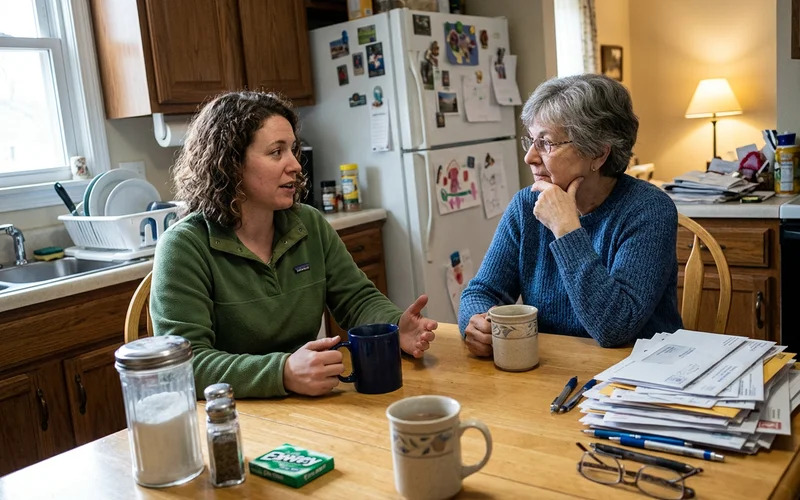
How to Open the Conversation
Pick one specific, concrete safety concern to start the dialogue. A blocked exit, a bathroom that no longer works, or a space heater sitting near stacked paper are tangible issues. Name that one thing rather than criticizing the whole house.
Focus on Concrete Safety Metrics
Adult Protective Services agencies across the US use a harm reduction model that prioritizes immediate life safety over aesthetic cleanliness. You should adopt this exact approach by setting actionable goals, like clearing a three-foot pathway to the front door.
We always ask permission before touching anything, including on a visit where nothing is being cleaned. That small act establishes that you are not going to take over, which immediately buys enormous goodwill.
Use language about your own worry rather than their behavior. Stating “I am scared about the back door being blocked” invites a collaborative response. Saying “this place is a fire hazard” invites a defensive argument.
The Power of Asking What They Want
Then ask what they would want if they had help. Do not tell them what they should do. Ask what they would want.
That single question frequently unlocks more progress than an hour of argument ever could. It shifts the dynamic from a hostile hoarding intervention to a partnership. If they mention wanting the kitchen table clear so they can eat a meal, you now have a shared, agreeable goal.
When to Involve Professionals
There are two distinct reasons to bring in a trained crew, and only one of them is about the physical volume of work.
Assessing the Capability Gap
The obvious reason is capability. Homes reaching a Level 3 or higher on the Institute for Challenging Disorganization (ICD) Clutter-Hoarding Scale often harbor dangers unseen by the naked eye. Biohazards, pest infestations, severe mold, or structural concerns require specialized equipment and safety protocols a family simply does not possess.
We strongly recommend comparing the physical requirements of the job against your own resources.
| Hoarding Severity | Typical Characteristics | Professional Help Needed? |
|---|---|---|
| Level 1 & 2 | Light to moderate clutter, exits accessible, minor pet odors. | Usually handled by family or a professional organizer. |
| Level 3 | Visible clutter exceeding space limits, blocked exits, structural issues. | Cleanup crews required for safety and heavy lifting. |
| Level 4 & 5 | Severe biohazards, rotting food, inaccessible rooms, fire hazards. | Mandatory specialized intervention and hazmat protocols. |
Preserving the Family Relationship
The less obvious reason matters significantly more. A trained crew removes the family relationship from the difficult sorting decisions.
When a son or daughter attempts helping a hoarding parent run the cleanout, every single box becomes loaded with decades of emotional history. When professionals run it, the person keeps the authority, and you get to stay their child rather than becoming their adversary.
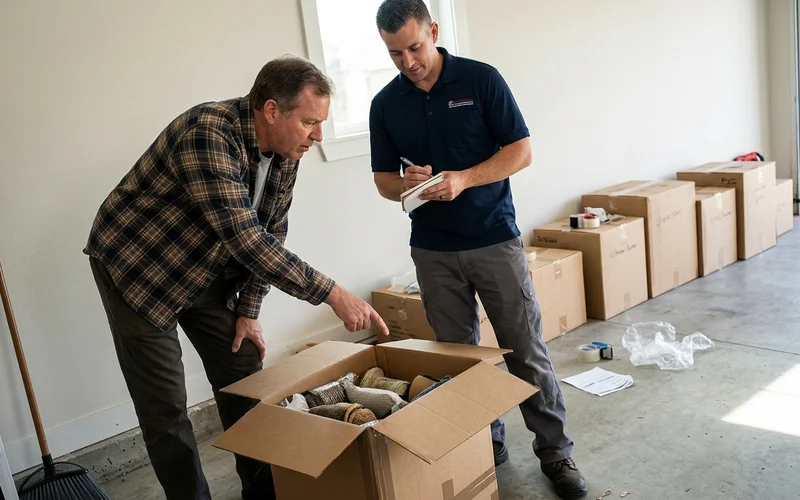
Our technicians receive extensive training in the psychology of hoarding disorder. The cleanup process moves entirely at the client’s pace. We never force a decision about what stays, and nothing leaves the property before it has been checked for value or meaning.
If it would help to know exactly how a project unfolds, what to expect during a hoarding cleanup walks through it step by step.
Respecting Autonomy Without Accepting Danger
These two realities sit in tension, and both are completely valid. An adult possesses the legal right to live exactly as they choose. However, they do not have the right to create conditions that endanger neighbors, children, or emergency responders.
In practice, the boundary line usually sits at egress, structural safety, basic sanitation, and the presence of dependents in the home. Below that line, practicing patience is the better strategy. Pushing them too hard costs you more trust than it gains.
Above that line, you must act and get help doing so. Local fire codes mandate clear pathways, and ignoring these hazards can result in forced condemnation.
We advise families to monitor the following critical safety triggers:
- Blocked Egress: Inability to open primary and secondary doors or windows.
- Utility Failures: Broken plumbing or heating systems that cannot be repaired due to clutter.
- Vulnerable Dependents: The presence of minors or pets living in unsanitary conditions.
- Combustible Proximity: Stacks of paper or clothing resting against radiators, stoves, or space heaters.
When a home crosses into these dangerous territories, Adult Protective Services or local code enforcement may step in. It is always better for the family to initiate a controlled cleanup before a crisis forces an eviction.
What to Do This Week: How to Help a Hoarder Loved One
Call us before you call them. There is no charge for the consultation. The conversation is strictly confidential, and you are not committing to anything.
Describe exactly what you saw during your last visit. We will tell you what the situation likely needs, what it is expected to cost, and whether your homeowners insurance may apply.
Most standard policies will not cover general clutter removal, but they may cover remediation if a covered peril caused secondary damage.
We will also talk through how to approach the initial conversation with your loved one. That specific part is usually much harder than the physical cleanup itself.
Take the first step today by reaching out for a free assessment, so you can learn exactly how to help a hoarder loved one and restore peace of mind to your family.
Frequently Asked Questions
How do I talk to a parent about their hoarding?
Should I clean it myself while they are away?
What if they refuse help entirely?
Is hoarding a mental health condition?
Related Guides
Does Homeowners Insurance Cover Hoarding Cleanup in Ohio?
How homeowners, auto, and commercial insurance can cover hoarding and biohazard cleanup in Ohio, plus programs covering up to $1,000 and claim help.
Recovering Valuables and Important Documents During a Cleanout
How we search for and recover cash, jewelry, documents, and keepsakes during a cleanout, categorized and returned to you, never blind junk removal.
The 5 Levels of Hoarding Explained
Understand the 5 levels of the Clutter-Hoarding Scale, what each level looks like, safety thresholds, and when to seek professional help.
What to Expect During a Hoarding Cleanup
From assessment to deep clean, see exactly what to expect during a hoarding cleanup, including discretion, timeline, sorting, and donation handling.
Talk it through with someone
There is no charge to ask a question, and no pressure attached to the answer. The helpline is answered 24 hours a day, every day of the year.