Have you ever walked into a home and felt completely overwhelmed by a wall of deeply embedded smells? Dealing with years of accumulated odors from a hoarding situation or heavy smoking is exhausting for any family, but true Odor & Smoke Removal is absolutely possible.
We know exactly how paralyzing it feels when surface scrubbing simply does not work. The good news is that restoring the space does not require you to tear down the entire house, and our hoarding cleanup and biohazard remediation team in Cincinnati treats odor as a structural problem rather than a cleaning one.
We want to show you exactly how to tackle this problem without the stress, so grab a cup of coffee, and let’s look at the simple steps together.
Odor & Smoke Removal: Why Deep Odors Cannot Be Cleaned Away
Deep, absorbed odors, cigarette smoke, decomposition, and multi-tenant buildup cannot be sprayed away. Porous materials like carpet, drywall, and insulation act like massive sponges that soak up these smells over years.
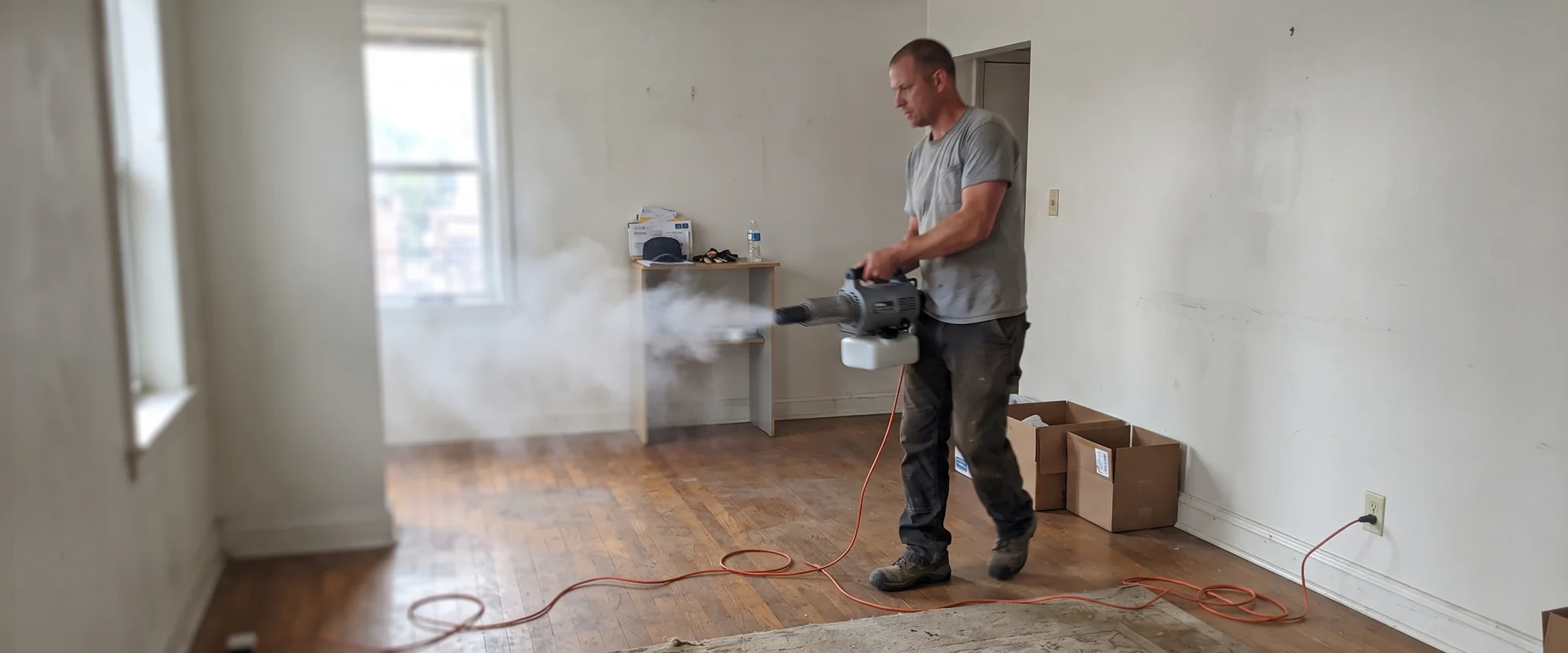
We remove these odors at the molecular level using source removal, thermal fogging, and specialized treatments. This process restores indoor air quality and market value for homes and apartments in as little as 48 hours.
“The secret to permanent odor removal is treating the molecular source, not just scrubbing the surface.”
The reason consumer products fail is simple. Odor is not a film sitting on top of a surface; it consists of volatile organic compounds absorbed deeply into the material.
We see this constantly in hoarding cleanouts, where grocery store sprays only add a competing smell for a few hours. The original reservoir keeps working.
Cigarette smoke adds a second, incredibly sticky layer to the problem. Research from the Thirdhand Smoke Resource Center reveals that third-hand smoke residue remains on household surfaces for more than five years after the last cigarette. We always warn families that this toxic residue physically coats every hard surface.
The Most Common Odor Reservoirs in a Home:
- Drywall and Ceiling Tiles: Highly porous materials that absorb smoke easily.
- HVAC Ductwork: Distributes contaminated air and traps sticky residues.
- Carpet and Padding: Holds decades of pet waste, spills, and smoke.
- Insulation: Traps decomposition odors and requires complete replacement.
Because this yellow-brown sticky tar continues off-gassing indefinitely, you have to clean it off properly. Standard water-based paints fail because the nicotine resin bleeds right through the new coat within weeks.
We strongly advise applying a specialized shellac-based primer like Zinsser B-I-N. This specific de-waxed shellac formula permanently locks in yellow nicotine stains and embedded odors, drying in just 45 minutes.
Then there is the HVAC system. Ductwork pulls odor-laden air from the dirtiest room in the house and pushes it into every other space. Our sequence reflects a targeted approach to stop this cycle completely.
Our 4-Step Sequence:
- Source Removal: Eliminating the contaminated items first.
- Hard Surface Cleaning: Physically washing away the sticky tar.
- Sealing: Applying shellac primers to any porous material that stays.
- Molecular Elimination: Using thermal fogging and air scrubbers to clean the air.
Each step prepares the environment to make the next one work perfectly.
Common Situations We Handle
Heavy smoker properties and rental turnovers
Decades of smoking leaves heavy nicotine residue on every surface and deep inside the ductwork. A 2026 US housing survey indicates that persistent cigarette smoke can drop a property’s resale value by up to 29 percent.
We know that these are the jobs where a fast, complete result makes the most financial difference. A smoke-damaged unit either sits empty or rents far below market value until the smell is completely eradicated.
Multi-tenant buildings and shared-wall units
Shared walls, common attics, and shared ventilation carry offensive odors directly between units. Smoke particles measure less than one micron in diameter, allowing them to easily travel through electrical outlets and HVAC returns.
We always assess the neighboring spaces as part of the initial scope. Treating only one side of a shared wall rarely holds, and it often leads to repeat complaints from neighbors.
Post-remediation odor after biohazard work
Decomposition and animal waste leave a lingering smell even after the physical contamination is removed. Masking agents will never cover up the volatile compounds released by biohazard situations.
We utilize advanced photo-catalytic oxidation technology, specifically Odorox hydroxyl generators, to target this issue. This equipment achieves a 99.99 percent kill rate against airborne bacteria and safely destroys VOCs at the molecular level without requiring the family to evacuate the home.
The treatment runs as the final phase of those projects, allowing a family to actually reoccupy the property.
Properties being prepared for sale
Buyers walk out over a bad smell faster than almost anything else. House hunters often filter out normal scents, but a foul odor is an immediate dealbreaker for new visitors.
We help sellers understand that neutralizing the air is one of the cheapest problems to fix relative to the positive effect on cash offers. Restoring the indoor air quality before listing usually pays for itself several times over.
How Long Does It Take and What Does It Cost?
A typical vacant unit with moderate smoke damage can be returned to market condition in about 48 hours. Properties needing material removal, replacement flooring, or full HVAC treatment take longer, generally three to five days.
We find that most residential odor projects fall between $1,500 and $8,000 across the US. This price is driven by square footage, severity, and how much material has to be physically removed rather than treated.
Typical Cost Breakdown for Odor Treatments:
| Treatment Type | Average US Cost Range | Best Used For |
|---|---|---|
| Thermal Fogging | $200 - $600 per treatment | Penetrating soft fabrics and drywall |
| Ozone / Hydroxyl Treatment | $235 - $700 per floor | Destroying airborne odor molecules |
| HVAC Duct Cleaning | $250 - $500 per system | Removing sticky soot from ventilation |
| Full Restoration (1,500 sq ft) | $4,000 - $10,500 total | Severe hoarding or heavy smoke damage |
We will tell you up front exactly which materials can be saved and which cannot. This honesty occasionally costs us an easy job, but it saves you a repeat call in a month.
A permanent solution is always the better choice for complete Odor & Smoke Removal, allowing your family to finally breathe easy. If you are dealing with a stressful cleanout, please reach out today to discuss the next steps.