Are you feeling completely overwhelmed by an animal waste cleanup project in your home right now?
Many families face this exact property crisis every single year. We understand how quickly accumulated pet or rodent droppings can take over a living space.
This specific challenge is incredibly common across the US, and there is absolutely zero shame in seeking professional help. A safe resolution is entirely possible with the right approach. Our experienced team is going to walk you through the exact steps needed to safely restore your home, the same way our hoarding cleanup and biohazard remediation crews in Cincinnati handle every call.
What Animal Waste Cleanup Involves
Accumulated animal feces, urine, and rodent droppings create serious zoonotic health risks. The mistake almost everyone makes is starting the process with a simple broom. We frequently remediate attics, crawlspaces, and entire homes facing threats from hantavirus to histoplasmosis.
Dried waste is actually at its most dangerous the moment it gets disturbed. A standard household vacuum just blows these dangerous particles straight through the filter into the air you breathe. Our crews know that aerosolized dried feces carry the microscopic particles that transmit disease.
The Centers for Disease Control and Prevention (CDC) reports that hantavirus pulmonary syndrome carries a 35% fatality rate in the US. Professional decontamination follows the strict guidelines of the ANSI/IICRC S540 standard for trauma and biohazard cleanup. We prioritize airflow control as our very first step on every job because of these high stakes.
Here is exactly how this secure process protects your family:
- HEPA Filtration: Hospital-grade filters capture microscopic pathogens before they spread.
- Sealed Disposal: Everything removed goes directly into heavy-duty, sealed biohazard bags rather than open bins.
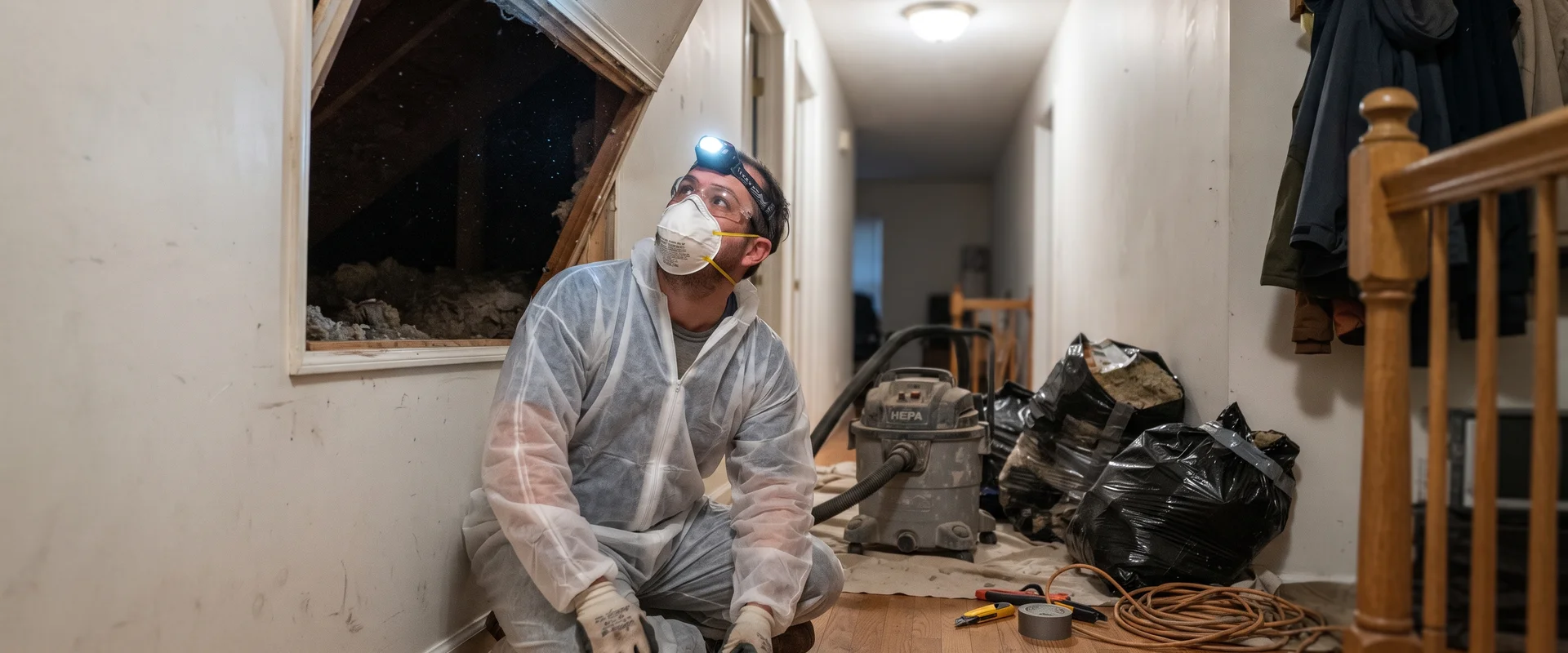
- Full PPE: Technicians wear rated respirators and disposable protective clothing for total safety.
- Airflow Management: Strategic exhaust systems ensure clean air constantly replaces contaminated air.
Negative pressure pulls air inward and filters it aggressively before it exits the building. Nothing harmful migrates into the rest of the house while the work happens. We build heavy-duty HEPA negative-air containment zones around the entire work area before touching anything.
Urine represents the second half of the problem and the main reason terrible odors persist after a basic cleanout. Surface cleaning simply cannot reach hidden deposits soaked into the wood grain. We often find that liquid waste soaks straight through finished flooring and requires chemical treatment.
Concentrated urine releases toxic ammonia gas continuously into your living environment. The National Institute for Occupational Safety and Health (NIOSH) warns that health effects from ammonia start at just 25 parts per million (ppm). Our technicians neutralize this harmful ammonia gas to make the air immediately safer.
You can actually smell ammonia when it reaches only 5 ppm, which means an odor is a clear warning sign. The subfloor must come out completely if the saturation goes too deep. We apply specialized subfloor bacterial enzyme digesters to chemically break down uric acid crystals rather than just masking the smell.
Comparing DIY Cleanup vs. Professional Decontamination:
| Cleanup Approach | Tool Used | Disease Spread Risk | Odor Removal |
|---|---|---|---|
| Typical DIY | Standard broom or vacuum | Extremely High (Aerosolizes dust) | Poor (Leaves uric acid crystals) |
| General Cleaning Company | Wet mop and retail disinfectant | Moderate (No containment or PPE) | Partial (Surface only, returns in warm weather) |
| Professional Remediation | HEPA negative-air machines | Near Zero (Total containment) | Complete (Bacterial enzyme digesters) |
Attics and crawlspaces almost always require complete insulation extraction during this process. Fresh insulation goes in as part of the final restoration phase. We safely remove porous fiberglass or cellulose insulation because it holds contamination indefinitely.
Common Situations We Handle
Rodent infestations in attics and crawlspaces
Droppings, nesting material, and urine accumulate out of sight for years inside walls and upper levels. These complex cleanups involve full insulation extraction and intense decontamination of the structural framing. We treat these jobs with extreme caution because mice are primary carriers of the Sin Nombre hantavirus strain in the US.
All entry points must be sealed so the space remains completely safe to enter again. Proper exclusion prevents future generations of rodents from returning. Our teams secure these vulnerabilities as a core part of the restoration process.
Animal hoarding environments
Homes with many animals accumulate waste much faster than anyone can practically manage. Studies indicate the US sees up to 2,000 new animal hoarding cases annually, making this a highly recognized psychological challenge. We know that the resident is usually feeling overwhelmed by circumstances rather than being intentionally careless.
Over 69% of these situations involve severe waste buildup in primary living areas, requiring rapid intervention. This respectful approach makes a massive difference for families dealing with Hoarding Disorder levels 1 through 5. Our specialized teams handle the heavy contamination while always treating the person with the utmost dignity.
Pet accidents that saturated flooring
A single elderly or ill pet can completely saturate a subfloor over just a few months. The persistent smell easily survives carpet replacement until the underlying wood is properly treated. We frequently see homeowners waste money on new carpets because the real odor source hides deep beneath the padding.
Subfloor removal becomes the only logical fix if the structural wood begins to rot. Chemical digestion is the only way to save wood that is structurally sound but highly contaminated. Our heavy-duty enzyme treatments physically consume the odor-causing bacteria at the source.
Bird guano and bat accumulation
Guano remediation carries a very specific and dangerous histoplasmosis fungal risk. This toxic accumulation requires specialized handling to protect anyone living in the building below. We apply the exact same strict containment discipline here as we do for dangerous rodent work.
Proper abatement completely removes the threat of airborne fungal spores. Comprehensive cleaning protects the respiratory health of your entire family. Our cleanup crews safely restore attics, eaves, and detached outbuildings to a healthy condition.
Signs You Need Professional Decontamination
If you can smell ammonia when you open a door, the chemical concentration is already meaningful. The 5 ppm smell threshold means your indoor air quality is already compromised. We consider a strong odor as a clear warning sign that professional remediation is necessary.
Watch for these critical warning signs that require immediate expert intervention:
- Widespread Accumulation: Droppings span across entire rooms rather than just one small corner.
- Hidden Contamination: Waste has penetrated wall cavities, crawlspaces, or deep into attic insulation.
- Vulnerable Residents: Anyone in the home suffers from asthma, COPD, or a weakened immune system.
- Structural Damage: Flooring feels soft or spongy beneath areas of heavy pet saturation.
You simply cannot reach hidden contamination safely without negative-air containment. The physical risks are simply too great to jeopardize your health for a property cleanup project. We urge families to avoid DIY cleaning entirely when facing these dangerous hazards.
Free, confidential assessments are available to help you understand your best options. Call the helpline any hour of the day or night for immediate, judgment-free support. We will tell you plainly and honestly exactly what your specific animal waste cleanup situation requires.
Let professional technicians take this heavy burden off your shoulders today. Your home can absolutely become a safe, healthy environment once again. Our team is ready to help you take that crucial first step.