
Why Household Odors Keep Coming Back
Why bad household odors keep returning: absorbed odors in porous materials, hidden sources, why air fresheners fail, and when to call a professional.
The Question Behind the Question
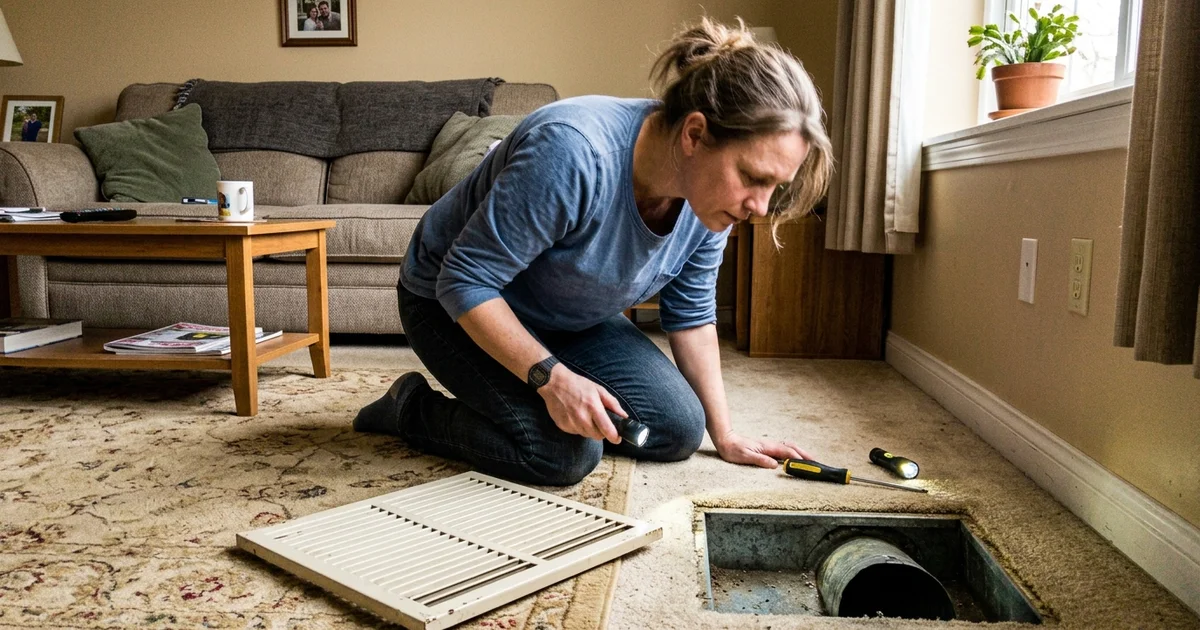
You probably know the exact frustration of scrubbing a room top to bottom, only to have the same smell return hours later. If you keep cleaning and the bad smell keeps coming back in the house, the odor is not on the surface. We see this exhaustion frequently when working with families facing severe household clutter and recurring house odor.
It is trapped deeply inside the structural materials beneath it.
Recent 2026 data from the National Institute for Occupational Safety and Health reveals that nearly 47% of US residential buildings struggle with detectable, recurring odors. Our odor and smoke removal work is essentially a targeted search for these hidden reservoirs, followed by removing them permanently.
Those statistics highlight a crucial reality about indoor air. So, let’s break down exactly where these smells hide, why standard products fail, and walk through the precise steps to eliminate them for good.
Porous Materials Are the Real Culprit
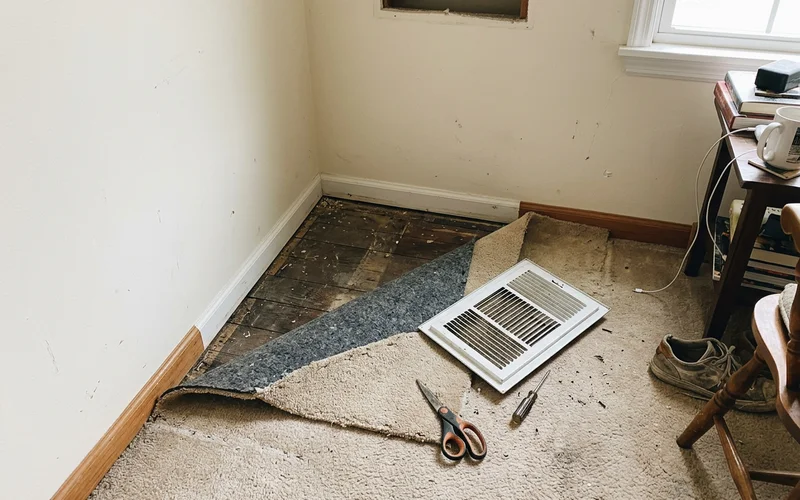
We find that porous household materials are the primary culprits because they act like giant sponges that absorb and slowly release odor molecules over time. Three-year-old pet accidents trapped in a subfloor are often still emitting gases today.
Carpet padding, drywall, and unsealed wood are the main reasons a smell won’t go away. We strongly advise families not to judge a room’s cleanliness by its surface materials alone.
Heat and humidity act as accelerators for these trapped smells. This explains the common seasonal pattern where rooms smell significantly worse during the humid summer months.
Our team uses a specific classification system to prioritize cleanup efforts.
| Material Type | Examples | Odor Retention Risk | Action Required |
|---|---|---|---|
| Highly Porous | Carpet padding, drywall, unsealed wood, upholstery | Extreme | Often requires removal or specialized sealing |
| Semi-Porous | Painted walls, sealed concrete, hardwood | Moderate | Deep cleaning and barrier sealants |
| Non-Porous | Glass, metal, porcelain, sealed tile | Low | Standard surface cleaning |
The US Environmental Protection Agency explicitly warns that porous materials like flooring adhesives, ceiling tiles, and composite wood readily absorb volatile compounds. Understanding the difference in materials saves a massive amount of wasted effort.
We recommend focusing your energy on the highly porous items first. Sealing or removing them provides the highest return on your investment.
The Hiding Places People Miss
Odors hide in primary invisible zones that surface wiping completely misses. We consistently find the worst offenders in spaces you rarely see.
Finding them requires looking past the clutter and examining the structural layers. Let’s examine the most common traps.
Beneath Carpets and Subfloors
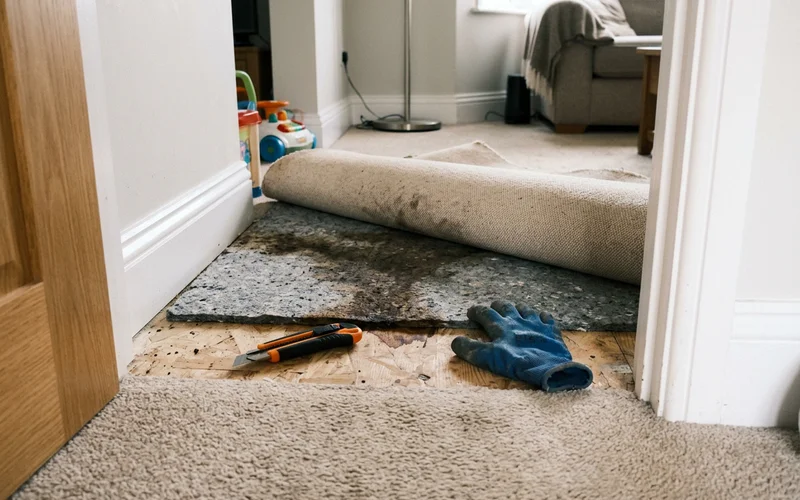
We regularly pull back pristine-looking carpets to reveal heavily stained padding and saturated wooden subfloors.
The padding beneath your carpet holds far more organic waste than the visible fibers. Lifting a corner in the smelliest room reveals more truth in thirty seconds than weeks of guessing.
Inside the HVAC System
We check the climate control system first when clients report a house-wide musty smell. Your ductwork collects contaminated residue and forcefully circulates it through every room.
If the smell feels roughly equal everywhere, suspect the HVAC system immediately. Our technicians rely on US Department of Energy statistics from 2026, which note that Americans spend 90% of their time indoors, making air duct hygiene absolutely critical.
Behind Appliances and Inside Walls
Spills routinely run under refrigerators and dishwashers where they sit indefinitely. Wall cavities also hide terrible secrets if a plumbing leak or pet accident seeped behind the baseboards.
We use specialized moisture meters to track these invisible spill trails.
Surface cleaning will never touch a problem located inside a sealed wall. You have to access the cavity to remove the source.
Attics and Crawlspaces
We urge families to inspect outer boundaries like attics and crawlspaces if the main living areas appear clean. Animal waste, dead rodents, and hidden moisture problems produce terrible smells that seem to come from nowhere.
These unseen zones act as incubators for bacteria and mold.
Why Air Fresheners and Candles Fail
We hear countless stories of families spending hundreds of dollars on candles to no avail. Fragrance products fail because they merely mask the issue temporarily while the source continues releasing gases.
They do not remove, alter, or neutralize the actual odor molecules in the room. Our experts always warn that once the synthetic fragrance fades, the original contamination source remains fully active.
A scented spray simply adds a second smell that competes with the first for a few hours. Mixing heavy artificial fragrances with organic decay often creates a combined stench more unpleasant than the original problem.
We know from experience that anyone who has walked into a heavily air-freshened room with an underlying hoarding situation recognizes this distinct, overwhelming smell.
The Hidden Danger of Ozone Machines
Ozone generators bought online sit in a completely different and potentially dangerous category. While they can genuinely break down airborne molecules, using them on an untreated source only clears the air for a moment.
We enforce strict safety protocols regarding ozone use because it does not stop the reservoir from refilling instantly. The US Environmental Protection Agency strongly warns against using ozone generators in occupied spaces.
Current EPA guidelines note that ozone is a severe lung irritant, and safe commercial FDA limits are strictly capped at 0.05 parts per million. We always prioritize physical source removal over potentially harmful chemical masking agents.
What Actually Works
The only effective method is to find the physical source, remove it completely, and seal any remaining porous materials. You must address the root cause before attempting to treat the air quality.
We rely on a strict, sequential process to guarantee permanent results. This progression forms the entire methodology, and skipping a phase guarantees the smell will return.
Every single step depends entirely on successfully completing the previous phase in our core methodology:
- Physical source removal
- Permanent porous material sealing
- HVAC system sanitation
- Molecular HEPA air treatment
We detail this exact progression in our guide on professional smoke odor removal, which walks through the most common household cases.
Following this blueprint saves immense time and frustration. It completely stops the exhausting cycle of endless surface cleaning.
When to Stop Trying Yourself
We regularly advise overwhelmed families to stop wasting money on retail products if multiple cleaning attempts fail. You should stop attempting DIY fixes if you have thoroughly cleaned a surface more than twice and the smell persists.
If the odor worsens with heat or remains completely impossible to locate, put down the cleaning supplies. We know it is perfectly acceptable to admit that a situation has grown beyond a standard weekend cleaning project.
A persistent smell that is strongest at floor level usually indicates a saturated subfloor requiring heavy demolition.
Sometimes, the answer is a simple fix you can handle on your own. We provide a free assessment to help you pinpoint exactly where the reservoir hides.
Other times, it requires specialized extraction and structural sealing. Reach out today to schedule an evaluation and take the first step toward a clean, healthy home.
Frequently Asked Questions
Why does the smell keep coming back?
Do air fresheners help?
Why does the smell get worse in summer?
How do I find the source?
Related Guides
How Professional Cigarette Smoke Odor Removal Works
How professional cigarette smoke odor removal works: nicotine and tar residue, source removal, sealing, thermal fogging, ozone, and HVAC considerations.
Odor Removal vs. Masking: What Actually Works
Odor removal vs. masking: masking versus molecular removal, ozone and hydroxyl versus sprays, durability of results, and cost versus benefit.
Learn more about Odor & Smoke Removal
If this guide described your situation, our odor removal service page walks through the full process, pricing, and what happens after you call.