
Cleaning Rodent Droppings and Hantavirus Risk
Why rodent droppings and hantavirus are dangerous: aerosolized dried feces, attic and crawlspace remediation, HEPA negative-air containment, and insulation removal.
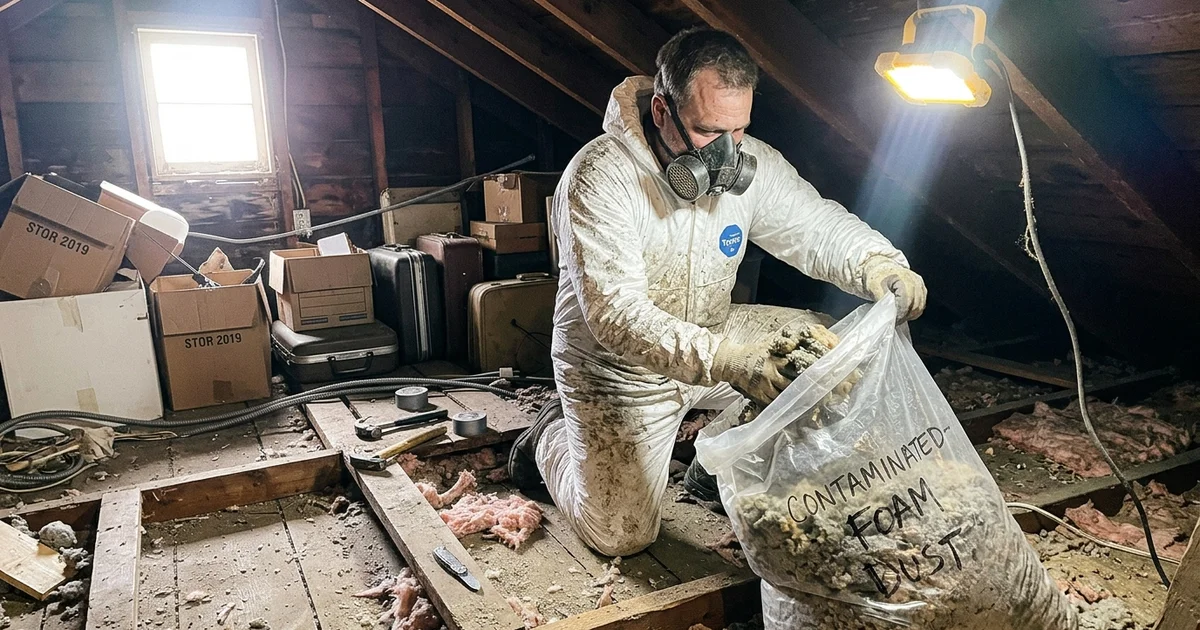
We understand that facing a home filled with accumulated items feels incredibly overwhelming. The instinct is usually to grab a broom and start clearing space as quickly as possible.
From what our team has seen during years of professional service, that sudden urge to sweep is exactly where the biggest health risk begins.
The primary danger of rodent droppings cleanup hantavirus exposure comes from inhaling dust, rather than touching the waste itself.
Our animal waste cleanup process is built around controlling that exact moment of disturbance. Let’s look at the data behind these risks and explore a few practical ways to handle the situation safely.
The Single Most Important Rule
The most critical rule for rodent droppings cleanup and hantavirus prevention is to avoid dry sweeping or vacuuming at all costs. This sounds like an odd place to start an article, but it is the most consequential sentence on this page.
Hantavirus transmits primarily through inhalation of particles released when dried rodent droppings and urine are disturbed. Dry sweeping throws that material into the air directly.
These common actions create immediate danger:
- Dry sweeping hard floors with a standard broom.
- Using shop vacuums without certified HEPA filters.
- Tearing out contaminated insulation without wetting it down first.
A standard household vacuum passes the virus straight through the filter and disperses it further into your breathing zone. According to 2026 updates from the Centers for Disease Control and Prevention, generating dust from dried waste remains the primary transmission route for this illness.
Our technicians see homeowners make this mistake frequently. Standard household equipment simply lacks the true HEPA filtration required to trap microscopic viral particles.
The material is relatively safe sitting undisturbed. The danger is created by the cleaning, which is exactly the thing most people do first.
What Hantavirus Actually Is
Hantavirus pulmonary syndrome is a serious respiratory illness carried by certain rodent species. In the United States, the deer mouse and the white-footed mouse are the primary carriers.
Infected rodents shed the virus in their urine, droppings, and saliva. A December 2025 epidemiological alert from the Pan American Health Organization reported a 29 percent case fatality rate for confirmed cases in the US that year.
| Symptom Phase | Typical Timeline | Key Warning Signs |
|---|---|---|
| Early Phase | 1 to 5 days | Fever, severe muscle aches, fatigue, dizziness |
| Cardiopulmonary Phase | 4 to 10 days | Sudden shortness of breath, chest tightness |
Proper hantavirus cleanup prevents this progression by neutralizing the pathogen before it becomes airborne. Early symptoms resemble influenza, bringing fever, severe muscle aches, and fatigue.
Cases are uncommon, and it is worth saying so rather than overstating the risk. Yet, the situations most associated with transmission are enclosed spaces with accumulated droppings being cleaned out.
We frequently receive calls about these exact high-risk environments. The infection can progress rapidly to severe respiratory distress once it reaches the cardiopulmonary phase.
Where Contamination Concentrates
Contamination concentrates heavily in undisturbed areas like attics, crawlspaces, and rooms affected by severe clutter. For individuals managing hoarding disorder, items stacked for long periods create perfect micro-environments for rodents to nest.
A single mouse can produce up to 70 droppings per day. This means a small family of mice can leave thousands of droppings in a single month.
The highest concentrations typically occur in these specific zones:
- Insulation layers where rodents tunnel for warmth.
- Cardboard boxes holding paper or fabric goods.
- Wall cavities beneath leaking roofs or pipes.
- The bottom layers of severely cluttered rooms.
Look for droppings along joists, in fiberglass insulation, inside gnawed packaging, and near a persistent musty ammonia smell.
We find that the quantity in an attic is almost always far greater than what is visible from the hatch.
People look in with a flashlight, see a scattering of waste, and do not realize the material underneath is completely saturated with urine.
How Small Amounts Can Be Handled Safely
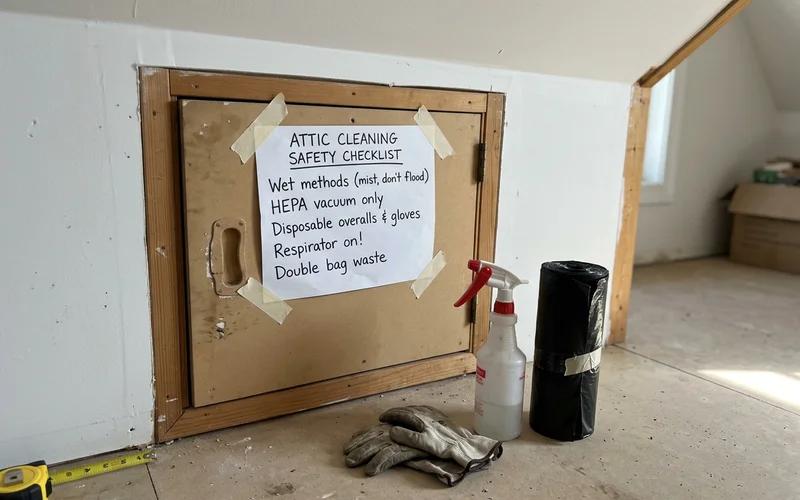
You can safely manage a handful of droppings on a hard surface at home using strict wet-cleaning methods.
Ventilate the space for thirty minutes first if you can do so safely, and leave the area while it airs.
The Environmental Protection Agency activated its Emerging Viral Pathogens policy for hantavirus in May 2026. This means you should select an EPA-registered disinfectant from List Q, or mix a fresh solution of 1.5 cups of household bleach per gallon of water.
The safety of any minor cleanup entirely depends on keeping the waste thoroughly wet and avoiding any action that creates dust.
Wear heavy-duty gloves and a fitted N95 respirator rather than a simple cloth mask. Spray the droppings with the disinfectant solution and let them soak for at least five minutes.
Touching them while dry is exactly what causes the mouse droppings danger. Wipe up with disposable towels, double bag everything, and wash your hands thoroughly afterward.
That covers a kitchen cupboard, but it does not cover an attic or a deeply cluttered living room.
What Professional Remediation Involves
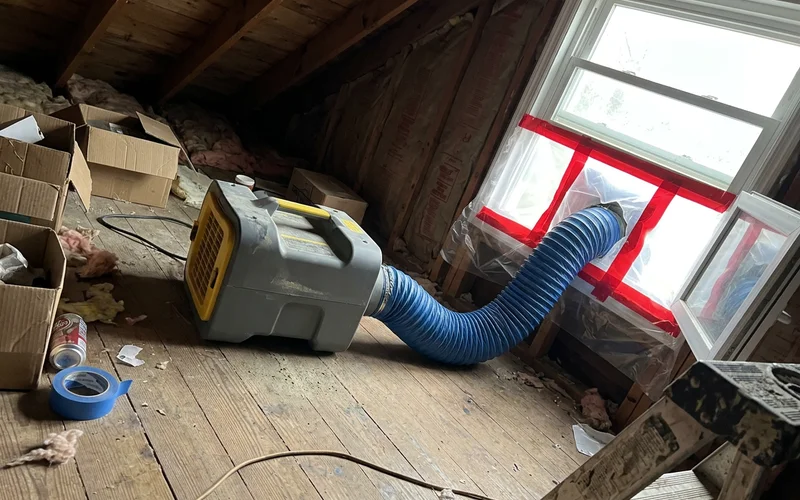
Professional remediation involves isolating the environment and using specialized equipment to remove biohazards without spreading dust.
Containment goes up before anything is touched.
HEPA negative-air machines create negative pressure inside the work zone. This ensures that airflow moves inward and all exhausted air passes through hospital-grade filtration.
Crews work in rated respiratory protection and disposable Tyvek suits, using wet methods throughout so nothing aerosolizes.
Biohazard Extraction
Contaminated insulation is extracted into sealed bags using specialized vacuums. Insulation absorbs urine and traps droppings, meaning it cannot be decontaminated in place.
Structural Disinfection
Exposed framing and decking are then cleaned, disinfected, and treated for odor.
We apply industrial-grade biocides to neutralize any remaining pathogens. These chemicals require specific dwell times to be fully effective.
Restoration and Prevention
Restoration follows with new insulation installed in the clean space. Entry points are carefully identified and sealed so the problem does not simply recur next winter.
Our structural repairs ensure the home remains safe and secure. Complete exclusion work provides long-term peace of mind.
When to Call Rather Than Try
Call a professional if droppings are widespread, if an attic or crawlspace is involved, or if the home contains large volumes of accumulated items. Individuals managing Level 3 through Level 5 hoarding situations face unique risks.
The sheer volume of material makes it nearly impossible to ventilate the space or wet down every contaminated surface properly.
Stop cleaning and call for help if you encounter these red flag indicators:
- Visible droppings inside HVAC ductwork or vents.
- Soiled fiberglass insulation covering an attic floor.
- Belongings stacked waist-high with signs of active nesting.
Call for help if insulation shows heavy contamination, or if anyone in the household has a compromised immune system. For the broader picture of what accumulated animal waste does to a property, health risks of animal waste covers the other pathogens involved.
Our team provides compassionate, discreet assessments for these exact situations. The consultation process is completely free.
We would rather tell you a situation is manageable yourself than have you disturb an attic full of dried waste.
Attempting a massive cleanup alone often leads to preventable illness. Handling a large rodent droppings cleanup hantavirus risk is simply not worth gambling with your health.
Reach out to a professional remediation service today to schedule a safe, thorough evaluation.
Frequently Asked Questions
Are mouse droppings dangerous?
How do you clean rodent droppings safely?
Do I need to remove the insulation?
What are the symptoms of hantavirus?
Related Guides
Health Risks of Animal Feces, Urine, and Hoarding
The health risks of animal feces, urine, and animal hoarding: zoonotic pathogens, histoplasmosis, toxoplasmosis, ammonia exposure, and why DIY is unsafe.
What to Expect During Animal Waste Remediation
What to expect during animal waste remediation: assessment, containment, removal and sanitizing, odor elimination, timeline, and restoration.
Learn more about Animal Waste Cleanup
If this guide described your situation, our animal waste service page walks through the full process, pricing, and what happens after you call.