
How Much Does Biohazard Cleanup Cost in Ohio?
What drives biohazard cleanup cost in Ohio, from labor and medical-waste poundage to containment, plus insurance coverage and deposit terms.
The Range, Honestly
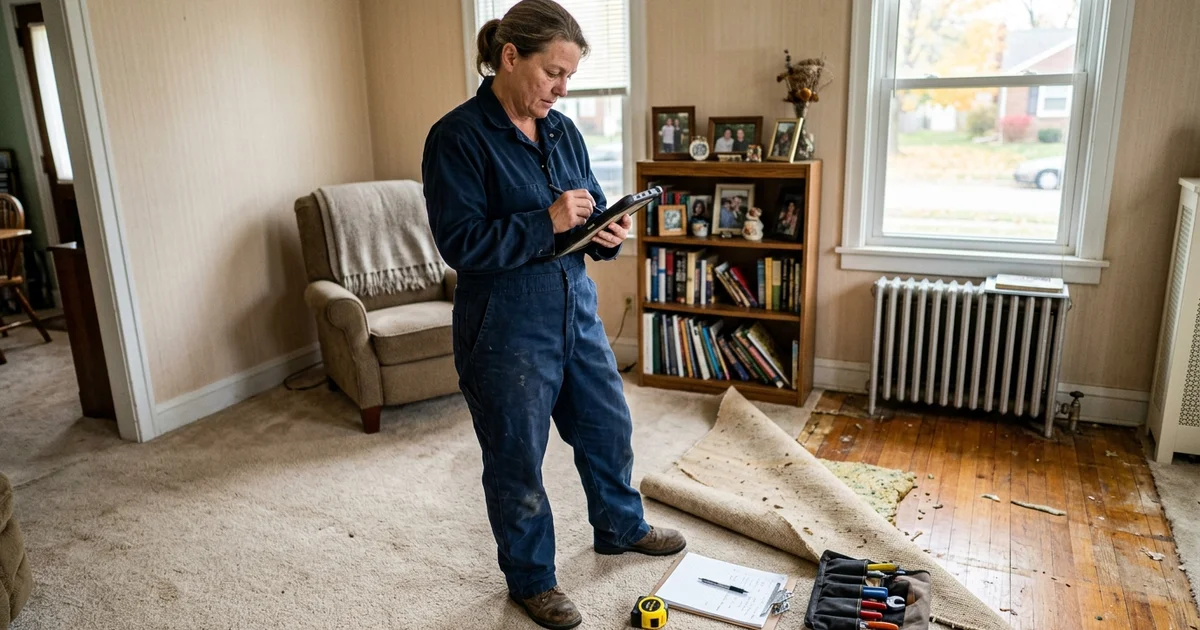
Many families facing a Level 3 to Level 5 hoarding situation quickly realize that surface cleaning simply is not enough. The average biohazard cleanup cost ohio residents pay typically falls between $3,000 and $25,000.
This wide price band depends entirely on the volume of regulated waste, the severity of the contamination, and the structural damage hiding underneath the clutter.
We base our biohazard and trauma cleanup estimates on four specific factors every single time.
Reviewing the data explains exactly what drives your final invoice, and highlights practical ways you can manage these expenses safely.
Factor 1: Labour Hours
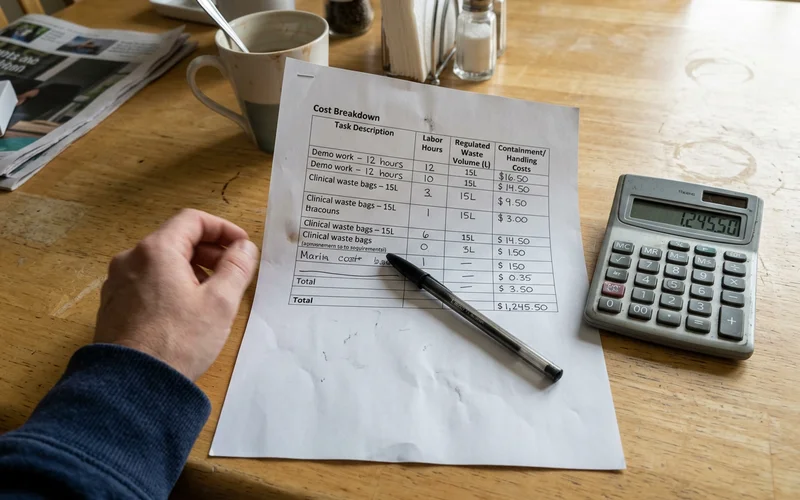
Labor is the largest component of your bill, usually calculated at $65 to $195 per hour per technician depending on the required hazard suits and respirators. Affected square footage and the specific Clutter-Hoarding Scale level dictate how many crew members are needed to clear the space safely.
We often assign a four-person team to complete a job in a single day that would take one person nearly a week.
Faster turnaround times reduce family disruption and minimize hotel costs if the home is currently uninhabitable.
Specific elements that increase labor time include:
- Moving heavy items up and down narrow basement stairs.
- Sorting salvageable heirlooms from unsalvageable debris.
- Working in extreme summer heat while wearing full personal protective equipment.
- Removing heavily soiled carpets and baseboards.
Factor 2: Regulated Medical Waste Volume
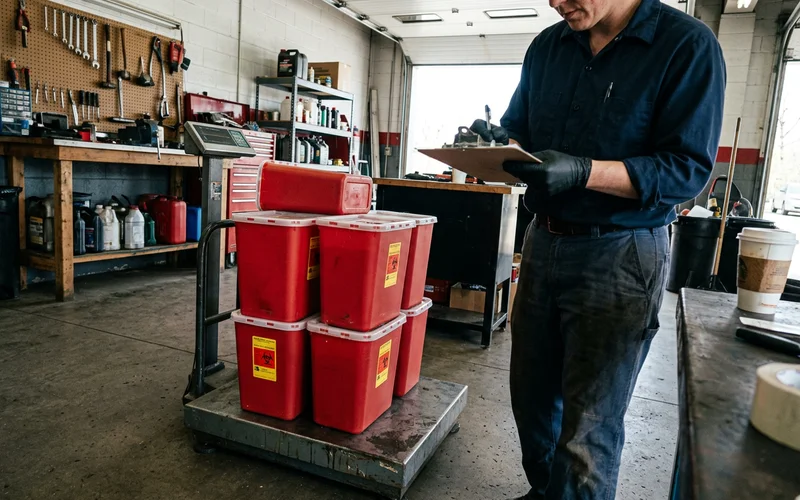
Anything contaminated with bodily fluids becomes regulated medical waste, which costs significantly more to discard than normal household trash. The Ohio Environmental Protection Agency heavily regulates infectious waste disposal for any entity generating more than 50 pounds in a month.
We must place these contaminated materials into sealed red bags, track them with specific manifests, and transport them to licensed medical waste facilities.
These specialized facilities charge by weight, meaning a heavily soiled mattress adds a massive premium compared to a contaminated tile floor. Delaying the cleanup allows fluids to penetrate further, turning more of your property into expensive regulated waste.
| Waste Type | Disposal Method | Cost Impact |
|---|---|---|
| Standard Household Clutter | Local County Landfill | $52.00 per ton (Average) |
| Regulated Biohazard Material | Licensed Medical Incinerator | Billed heavily per pound |
Factor 3: Containment and Equipment
Professional remediation requires expensive, single-use protective gear and commercial-grade air filtration systems. Every time a technician enters a contaminated hoarding environment, they consume fresh protective suits, double-layered gloves, and respirator cartridges.
Our crews also deploy negative air machines with HEPA filters to capture airborne pathogens and mold spores disturbed during the cleanout process.
Overnight odor treatments carry their own specific equipment fees.
- Hydroxyl Generators: Neutralize deep odors without damaging sensitive electronics or artwork.
- Thermal Fogging: Penetrates structural cavities to eliminate stubborn decomposition smells.
- Enzymatic Cleansers: Break down biological matter at the microscopic level.
- ATP Verification Testing: Objective swab tests that prove a surface is biologically clean.
Factor 4: Structural Removal and Restoration
Fluids penetrate porous materials quickly, forcing the physical removal of carpets, subfloors, and drywall. Delaying the start of a project allows contaminants to soak deeper into the structural wood, which rapidly multiplies your total demolition expenses.
We assess the exact depth of this penetration on site using moisture meters and visual inspection rather than guessing from photographs.
Replacing these materials adds significant construction labor to the initial remediation invoice.
Pro-Tip for Families: Some clients choose to hire professional biohazard teams for the hazardous cleanout phase, and then hire a standard local contractor for the drywall and flooring replacement. This separation of services is a highly effective way to manage your total budget.
Why It Costs More Than Cleaning
Biohazard remediation is a highly regulated public health service, not a basic janitorial task. The Occupational Safety and Health Administration enforces strict Bloodborne Pathogen standards (29 CFR 1910.1030) to protect workers handling infectious materials.
Our pricing covers the mandatory compliance training, the medical monitoring for our staff, and the expensive liability insurance required to perform this dangerous work legally.
Failing to follow these OSHA protocols carries severe consequences for operating businesses, with 2026 maximum fines reaching $16,550 for a single serious violation.
Comparing standard house cleaning rates to a professional trauma cleanup cost is simply impossible. Every stage of the biohazard remediation process step by step carries labour, equipment, and disposal costs that a janitorial quote never accounts for. The trauma cleanup industry unfortunately struggles with some providers charging predatory rates during family crises.
We deliberately maintain moderate, transparent pricing to help overwhelmed families recover their homes safely. We will also tell you honestly when part of a job does not require our specialized services.
| Standard Janitorial Service | Biohazard Remediation Service |
|---|---|
| Surface dirt and dust removal | Pathogen and bodily fluid eradication |
| Standard household trash bags | Manifested red-bag medical waste |
| Visual inspection only | ATP swab verification testing |
Insurance and Payment Terms
Homeowners insurance policies frequently cover the high costs associated with biohazard and trauma remediation. Commercial policies and auto insurance also offer specific provisions for accidental contamination or unattended deaths.
We coordinate directly with your insurance adjuster to provide all required itemized documentation, including the final waste disposal manifests.
For a detailed breakdown on exactly what your policy might approve, please review our guide on does insurance cover this.
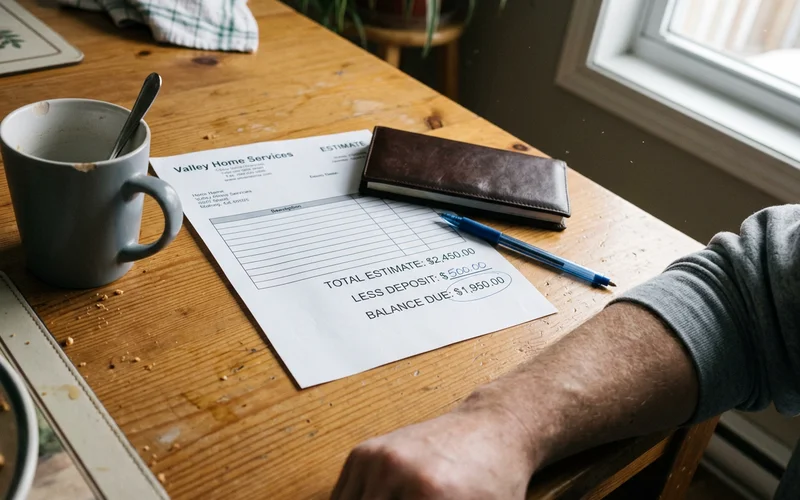
Minimizing your out-of-pocket biohazard cleanup price is always a top priority. If a project is not covered by insurance, structured payment terms keep the process moving forward:
- Small Credit Card Deposit: Allows immediate mobilization without waiting for slow claim approvals.
- Balance Billed Later: Gives families time to organize their finances or estate funds.
- Victim Compensation Programs: Ohio programs offer up to $750 for specific crime-related cleanups, which offsets deductibles.
Getting an Accurate Number
A few clear photographs and a short description of the property are usually enough to generate a reliable preliminary estimate. Taking photos of a hoarding situation is incredibly stressful, but it gives professionals the vital context needed regarding the volume and specific hazards present.
Our team provides these initial reviews completely free of charge, with zero obligation to book a service.
Scheduling an in-person, on-site assessment is the best way to secure a firm, written price guarantee before any demolition or sorting begins.
Take the first step to reclaim a safe living environment by requesting a confidential quote today.
Frequently Asked Questions
What affects biohazard cleanup cost?
Does insurance cover biohazard cleanup?
Why does it cost more than regular cleaning?
Do I have to pay everything up front?
Related Guides
The Biohazard Remediation Process Step by Step
See the full biohazard remediation process: assessment, containment, removal, EPA-registered disinfection, ATP verification, and clearance documentation.
Fentanyl and Drug Residue Decontamination
Safe fentanyl and drug-residue decontamination in Cincinnati for landlords, buyers, and first responders, covering surface contamination risks, PPE, and verification.
Is It Safe to Clean Up Biohazards Yourself?
Why DIY biohazard cleanup is dangerous, covering bloodborne pathogens, cross-contamination, respiratory hazards, and legal liability, and when to call professionals.
Sewage and Blackwater Cleanup After a Backup
Category 3 blackwater and sewage backup cleanup in Cincinnati, covering health hazards, extraction, sanitization, and drying after Ohio River and Mill Creek flooding.
Learn more about Biohazard & Trauma Scene Cleanup
If this guide described your situation, our biohazard cleanup service page walks through the full process, pricing, and what happens after you call.