
What Happens to a Home After an Unattended Death
Understand what happens to a property after an unattended death, from decomposition and biological hazards to structural permeation and why the home is unsafe.
Why This Page Exists
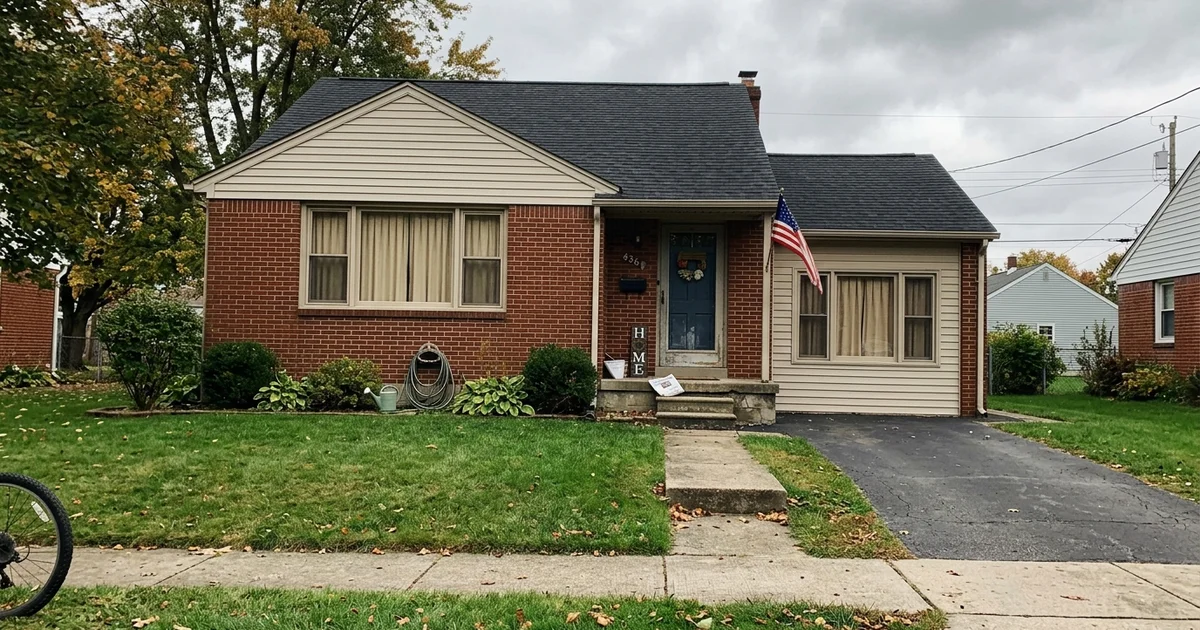
Families ask a variation of the same question during almost every first call: exactly what happens to a house after someone dies undiscovered, and is the property completely ruined? We hear this specific fear constantly, especially from relatives managing properties affected by hoarding conditions. Almost always, the answer is no, the house is not ruined.
Our unattended death cleanup crews handle these sensitive situations daily across the US. Understanding the physical reality of what has occurred helps clarify why standard cleaning fails and why the timeline dictates the recovery cost.
We wrote this page to provide accurate, clinical facts rather than false reassurance.
There is nothing described below designed to distress you.
What Happens Biologically
We see the biological breakdown process begin internally just hours after a person passes. The body’s own bacteria initiate a process called autolysis, which eventually transitions into putrefaction as tissues break down. Our technicians must address the fluids and gases released during these distinct stages. Two specific compounds, cadaverine and putrescine, bond heavily to porous materials and generate a characteristic, lingering odor within 24 to 48 hours.
We frequently find that a heavily hoarded home accelerates this timeline dramatically. Piles of belongings trap heat inside the room, pushing the environment above 68 degrees Fahrenheit and speeding up bacterial growth. Our teams rely on industrial chemistry because ordinary air freshening simply covers up the indole and skatole gases produced during decay. Gravity forces these fluids downward almost immediately. We find that carpeting absorbs the moisture first, followed by the foam padding, and finally the seams of the flooring below.
Structural Permeation
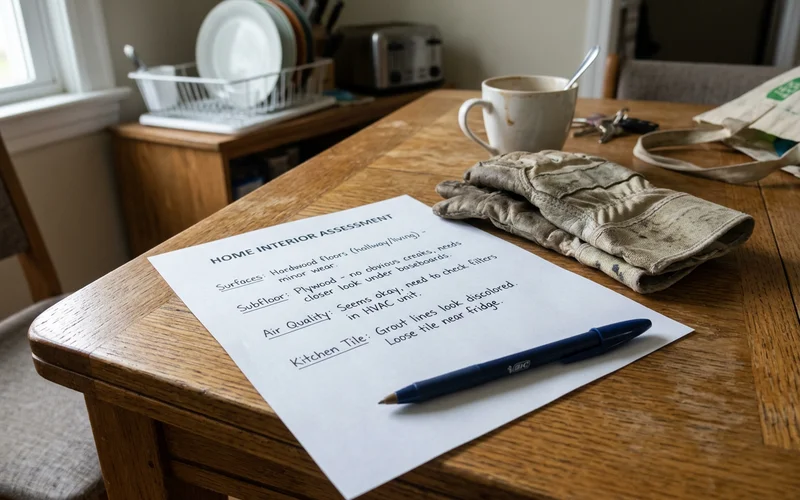
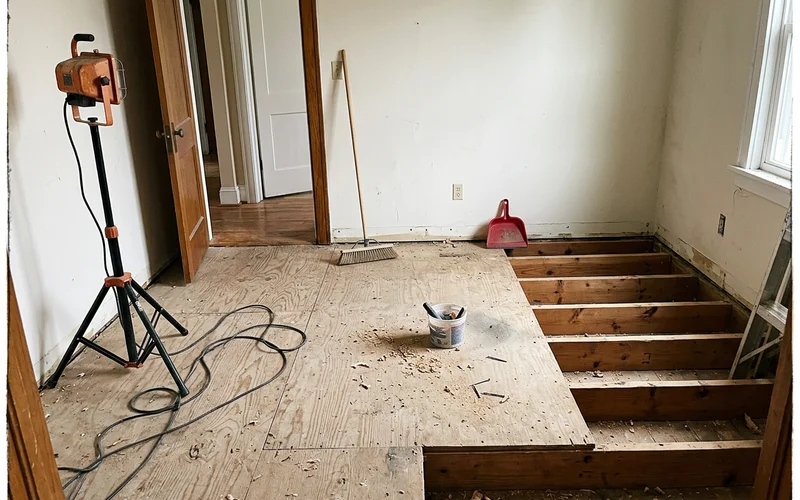
Structural damage determines the total scope of the recovery job, and it remains completely invisible from the surface level. Our remediation plans depend entirely on how far fluids have wicked into the building materials. Subfloor materials, usually permeable OSB or plywood in most US homes, act like massive sponges for unattended death home damage. We routinely deal with situations where a Level 3 to 5 hoarding environment hides the initial stain beneath thousands of pounds of clustered possessions. Understanding what happens to a house after someone dies helps explain why this fluid spreads outward for a few specific reasons:
- Capillary action: The wood grain pulls moisture horizontally away from the source.
- Compression weight: Heavy piles of hoarded items force liquids deeper into the floor seams.
- Gravity: Advanced contamination travels straight through the decking to the structural floor joists beneath.
Our crews must completely remove the affected flooring and saturated wood grain to prevent the odor from returning. Surface scrubbing simply fails to reach this deep contamination source. We treat the exposed framing with an antimicrobial encapsulation spray before any new construction begins.
The final step requires absolute certainty. Our clearance protocol utilizes ATP bioluminescence testing to measure Relative Light Units (RLU) on the remaining structure. Achieving a score below the accepted 10 RLU healthcare standard provides scientific proof that the microscopic organic matter is truly gone.
Biological Hazards Present
We handle the material involved with the exact same bloodborne pathogen precautions as any severe biohazard scene. Remediation strictly follows the OSHA 29 CFR 1910.1030 standard to protect everyone entering the property. Our technicians face genuine risks from bacteria like Clostridium and Hepatitis B. The Hepatitis B virus can remain viable on household surfaces for up to seven days, requiring hospital-grade disinfectants.
We must also manage a significant airborne component. Particulate matter circulating in the affected space creates a serious respiratory hazard. Our crews work in full-face respirators rather than standard dust masks to filter out these microscopic threats.
Insect activity follows the timeline quickly. We expect to see blow flies and larvae as a normal biological reality in these environments. These insects act as vectors, picking up infectious fluids and carrying contamination far beyond the original room. Our vector control process tackles this insect activity as an integrated part of the remediation, rather than treating it as a separate pest problem.
Why the HVAC Matters
If the heating or cooling system was running during the incident, it constantly pulled contaminated air from the affected room. Our teams find that this active circulation distributes odor compounds, like hydrogen sulfide, through the entire property. This forced air spreads particulate to rooms that were never physically near the source of the biohazard. We notice this problem gets much worse in hoarded homes, where blocked vents force the system to pull air through tighter spaces.
Shutting down the airflow is the single most useful thing a family can do before the remediation crew arrives. Our immediate advice is to turn the system off completely if the thermostat is safely reachable. Standard residential air filters simply cannot stop microscopic odor molecules. We see that stopping the fan meaningfully reduces the final scope of what has to be chemically treated.
Timeline Urgency, Stated Plainly
We are not going to pressure you into a rushed decision. But the honest, practical reality is that a delay directly increases the scope and expense of the recovery. Our records show a massive difference between an incident addressed in three days versus three weeks. The US experienced roughly 128,800 unattended home deaths in 2022, and with nearly 30% of households now occupied by a single person, discovery times are extending.
We frequently observe that hoarding conditions obscure the normal warning signs of an absence, delaying discovery significantly. The chart below illustrates how time alters the structural impact:
| Discovery Timeline | Expected Permeation Level | Common Remediation Scope |
|---|---|---|
| Within 3 to 5 Days | Surface flooring, carpet padding | Carpet removal, localized cleaning, surface disinfection |
| Within 3 to 5 Weeks | Subfloor, wall baseboards, joists | Subfloor extraction, structural sealing, whole-home odor treatment |
Our estimates for a delayed scene often reflect a cost difference of several thousand dollars due to the invasive structural tear-out required. If authorities have not yet released the scene, that timing remains out of your hands and out of the contractor’s control. We can successfully stage crews so the containment and removal work begins the exact day the property release happens.
What Restoration Involves
Proper restoration requires the complete removal of contaminated material, sealing of the exposed structure, and permanent odor elimination at the molecular level. We follow strict protocols to guarantee the environment is safe. How decomposition and odor are removed covers that second half of the process in deep, technical detail. Our primary goal is completely eradicating the source, not applying temporary chemical masks.
The final outcome, in the overwhelming majority of cases, is a home that is genuinely safe and genuinely liveable again. We do not just cover up the damage caused by decomposition in a house. The property is completely restored.
Our support staff can answer specific questions about what happens to a house after someone dies based on your specific floor plan. Reach out today, and a certified technician will walk you through the immediate next steps to protect the home.
Frequently Asked Questions
Is a home safe to enter after an unattended death?
How quickly does damage occur?
Will the whole house be affected or just one room?
Can the property be lived in again?
Related Guides
How Decomposition and Odor Are Removed From a Property
How professionals remove decomposition and odor: fluid removal, subfloor sealing, hydroxyl and ozone fogging, air scrubbing, and odor verification.
What to Do After Finding a Loved One Who Has Died at Home
A compassionate step-by-step guide after finding a loved one who has died at home, covering calling authorities, coroner release, funeral homes, and remediation.
What to Expect After the Coroner Releases the Scene
What to expect after the coroner releases a scene: handoff timeline, first steps, what the crew does on arrival, insurance, property access, and discretion.
Who Pays for Unattended Death Cleanup in Ohio?
Who pays for unattended death cleanup in Ohio: homeowners insurance, estate responsibility, victim-assistance programs, deposit terms, and claim help.
Learn more about Unattended Death Cleanup
If this guide described your situation, our unattended death service page walks through the full process, pricing, and what happens after you call.