
Who Pays for Unattended Death Cleanup in Ohio?
Who pays for unattended death cleanup in Ohio: homeowners insurance, estate responsibility, victim-assistance programs, deposit terms, and claim help.

The Question Families Are Afraid to Ask About Who Pays for Unattended Death Cleanup
In our line of work, the question of who pays for unattended death cleanup usually gets held back. You might feel it is the wrong thing to think about while dealing with a family tragedy.
From what I have seen over the years, worrying about expenses is a completely reasonable response.
Our unattended death cleanup cost typically runs between $3,000 and $25,000.
According to 2026 industry data from the American Bio Recovery Association, the final bill depends on three main factors:
- The level of structural material that must be removed.
- The volume of regulated medical waste involved.
- The amount of time elapsed before discovery.
So, I am going to break down the main ways these invoices get handled and walk through the exact payment routes available to you. If you are still earlier in the process, our guide on what to expect after the coroner releases the scene covers what happens before any invoice exists.

Route 1: Homeowners Insurance
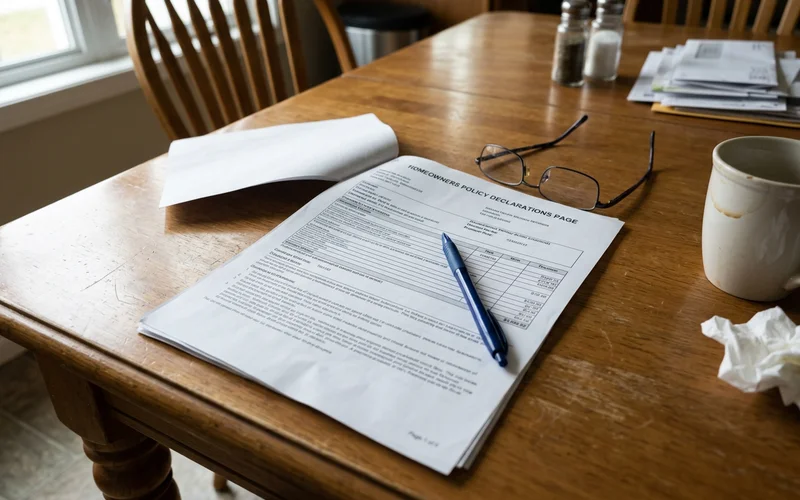
Homeowners policies frequently cover biohazard remediation following a death in the home. This is the most common answer, and it surprises most families.
Standard HO-3 policies treat this as damage requiring hazardous remediation rather than as a housekeeping issue. Decomposition fluids damage flooring, subfloor, and structure.
Restoring those areas requires containment, licensed disposal, and verification. That creates a valid claim under the “sudden and accidental” property damage provisions of most standard policies.
To give you a clearer picture, here is how the financial breakdown typically looks:
| Policy Element | Typical Structure in 2026 | Who Pays |
|---|---|---|
| Deductible | $500 to $2,000 (National average is $1,000) | Paid by the family or estate out of pocket |
| Property Damage | Up to policy dwelling limits | Covered by insurance carrier |
| Personal Property | Varies based on the policy type | Covered by insurance carrier |
The policy belongs to the property, not the person. If the deceased was the policyholder, the estate or executor generally has authority to file the claim on the home where the death occurred.
We coordinate the claim directly with your carrier and provide itemized documentation. This file includes photographs, containment and equipment detail, regulated waste manifests, and post-remediation ATP verification results.
That strict documentation is frequently the difference between approval and denial. For the wider picture on how coverage works, see insurance coverage in Ohio.
Route 2: The Estate
Where insurance does not apply, estate responsibility cleanup is the next option. The remediation invoice is normally treated as an estate expense.
These funds are paid from estate assets alongside other costs of settling the property. This matters practically because the typical probate timeline in Ohio takes 6 to 12 months for a full administration.
During that probate window, a property usually cannot be sold in an unremediated condition. Under Ohio Revised Code 5302.30, the Residential Property Disclosure Form requires sellers to disclose physical property defects.
“While Ohio law does not require you to disclose the death itself, you must disclose structural damage caused by biological contamination.”
Hiding biohazard contamination in the subfloor creates a serious legal risk for the executor.
We provide documentation formatted specifically for an estate file. You receive comprehensive records to prove the hazard was completely neutralized.
Attorneys ask for these specific records to close the sale:
- An itemized scope of work.
- Before-and-after photographs.
- Certified disposal manifests.
- Post-remediation ATP verification results.
Having these documents ready avoids a frustrating second conversation later.
Route 3: Assistance Programs
Separate from insurance and estate funds, assistance programs exist that most families have never heard of. Victim-assistance programs may apply where the death involved a violent crime.
In Ohio, the Attorney General administers the Victims of Crime Compensation Program. This fund assists innocent victims of violent crime and their families.
According to the Ohio Revised Code 2743.51, this specific program caps crime scene cleanup and repair at $750 per claim, but allows up to $50,000 for total expenditures.
While that $750 figure seldom covers an entire trauma remediation, it offsets a real portion of your out-of-pocket expenses. The remaining program funds can cover counseling, medical bills, or funeral expenses that insurance does not handle.
We help clients find and apply to these programs as part of the job. Asking costs nothing, and the administrative help is completely free.
Rental and Commercial Properties
In a rental, the property owner is generally responsible for restoring the unit. Commercial or landlord policies frequently cover biohazard remediation in these spaces.
Depending on the circumstances and lease terms, the deceased tenant’s estate may bear some financial responsibility.
We do not adjudicate those disputes. Instead, the goal is to document the scope factually so all parties and their insurers have a clear record.
Blood and bodily fluids are classified as biohazards under federal OSHA standard 29 CFR 1910.1030, meaning this biological material cannot be legally handled by a standard cleaning crew.
Under state regulations, the resulting debris is considered regulated infectious waste.
Here are the regulatory requirements for handling this waste:
- Contaminated material cannot legally go in a regular trash dumpster.
- Waste must be transported under Ohio EPA registration.
- Disposal requires a licensed medical waste facility.
How Payment Actually Works With Us
Our team requires a small credit card deposit to start the work. The remaining balance is billed later.
That structure exists deliberately to protect your property. Waiting on an insurance claim decision before beginning remediation makes the situation significantly worse.
According to industry standards, delaying cleanup by even 48 to 72 hours allows biological contamination to penetrate deeper into porous surfaces. Fluids soak through carpet into the subfloor and joists.
Here is how delay impacts the final invoice:
- Day 1: Contamination stays mostly on the surface, keeping costs closer to the $3,000 minimum.
- Day 3: Fluids penetrate the subfloor, requiring structural tear-out.
- Day 7+: Odour spreads rapidly through the HVAC system, pushing costs toward $11,000 or higher.
A fast response prevents a manageable project from turning into a major demolition.
A Note on the Industry
The trauma cleanup industry has a reputation for predatory pricing at the worst moment of a person’s life. Inflated quotes and high-pressure sales tactics at the front door are common.
Some bad actors hide exorbitant per-box disposal fees for biohazard waste. Those hidden charges only appear on the final invoice after the work is done.
Our position is to provide transparency and respect. You deserve clear answers before making any financial commitments.
We operate under three strict pricing principles:
- A written scope and price are provided before anything starts.
- No hidden line items are added to the invoice afterward.
- You receive an honest assessment if a claim is not worth filing.
Figuring out who pays for unattended death cleanup should never feel like a trap. Call us today to ask what a service will cost without anyone turning up at your house.
Frequently Asked Questions
Does insurance cover unattended death cleanup?
Is the estate responsible?
What if there is no insurance and no estate funds?
Does the landlord or tenant pay in a rental property?
Related Guides
How Decomposition and Odor Are Removed From a Property
How professionals remove decomposition and odor: fluid removal, subfloor sealing, hydroxyl and ozone fogging, air scrubbing, and odor verification.
What Happens to a Home After an Unattended Death
Understand what happens to a property after an unattended death, from decomposition and biological hazards to structural permeation and why the home is unsafe.
What to Do After Finding a Loved One Who Has Died at Home
A compassionate step-by-step guide after finding a loved one who has died at home, covering calling authorities, coroner release, funeral homes, and remediation.
What to Expect After the Coroner Releases the Scene
What to expect after the coroner releases a scene: handoff timeline, first steps, what the crew does on arrival, insurance, property access, and discretion.
Learn more about Unattended Death Cleanup
If this guide described your situation, our unattended death service page walks through the full process, pricing, and what happens after you call.