
What to Expect After the Coroner Releases the Scene
What to expect after the coroner releases a scene: handoff timeline, first steps, what the crew does on arrival, insurance, property access, and discretion.
The Handoff Nobody Prepares You For
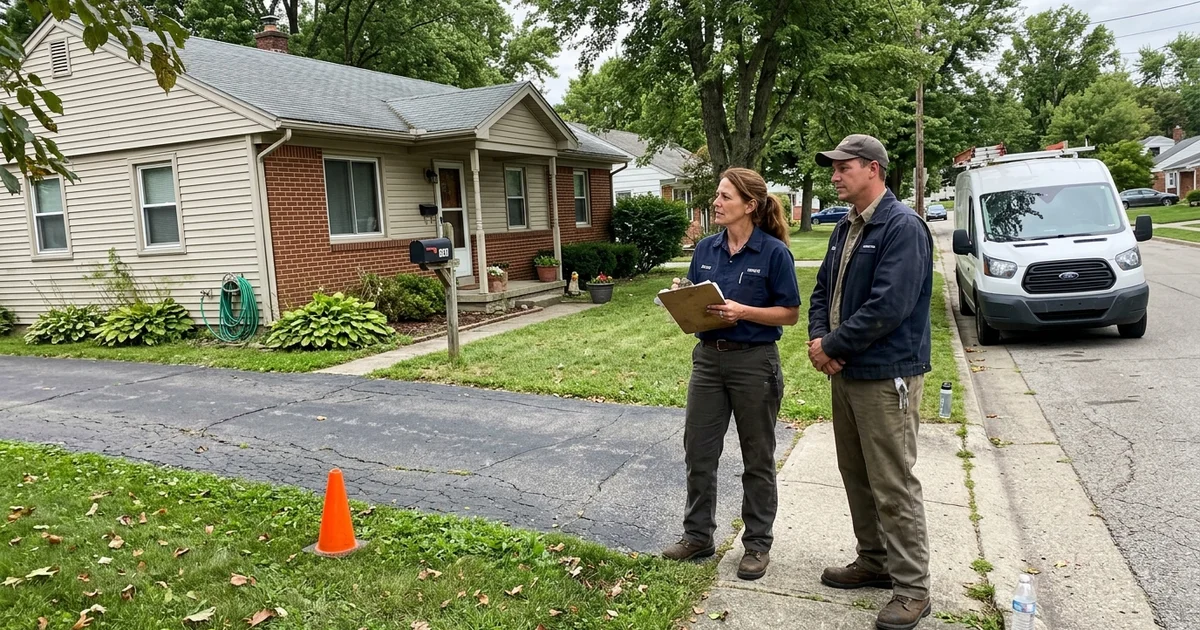
The coroner completes their work, the vehicles leave, and the street goes quiet, leaving you to quickly figure out what happens after coroner releases scene.
We see this sudden transition catch almost every family completely off guard.
Authorities handle everything up to that point, and then the legal responsibility transfers entirely back to you.
Our unattended death cleanup service picks up exactly at that line, offering specialized support for homes impacted by Level 1 through Level 5 hoarding disorder.
This guide will detail the legal property handoff and the practical safety steps your family must take next.
Call Before Release, If You Can
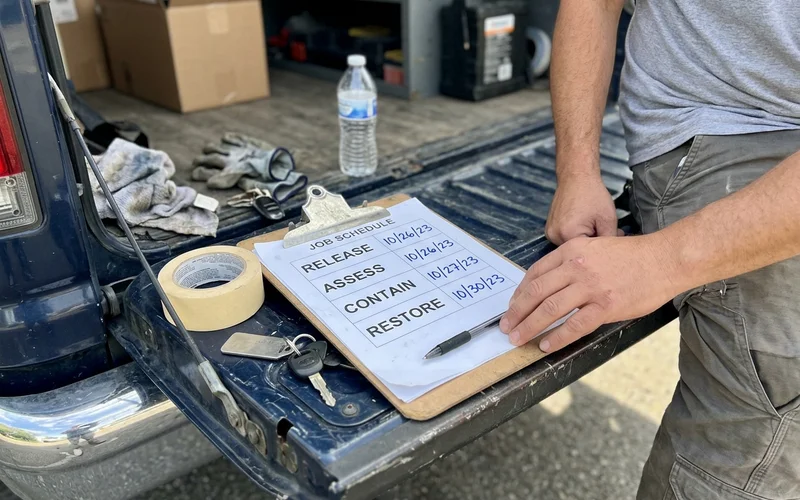
We strongly advise families to contact a professional coroner release cleanup team before the medical examiner officially signs the property handoff.
Early coordination allows a crew to stage equipment and start the containment process the very same day local US authorities return the house.
Our early intervention directly stops biological fluids from penetrating deeper into the home’s structure.
Human decomposition accelerates rapidly, meaning fluids will quickly soak through carpets and seep into the wooden subflooring.
We see this timeline become even more critical in homes affected by hoarding disorder, as dense clutter absorbs pathogens and traps severe odors.
A prompt call helps control the situation in several verifiable ways:
- Halting fluid migration: Fluids move continuously, and waiting 48 extra hours often doubles the amount of structural drywall and flooring that requires removal.
- Preventing pest infestations: Biological material attracts insects within hours, creating secondary contamination throughout the residence.
- Staging resources: Equipment like commercial ozone generators can be reserved and ready for immediate deployment.
Our support staff actively monitors the release status with the local justice of the peace or county coroner so you do not have to make those stressful phone calls.
This proactive approach is a simple choice that measurably reduces both your final cost and daily disruption.
What Happens After Coroner Releases Scene: The First Hours
In the first hours after coroner leaves, a certified technician conducts a comprehensive hazard assessment without touching or moving any items.
Our responders arrive in unmarked vehicles and strictly observe the site to map the initial contamination footprint.
The assessment maps the full extent of the biological exposure, checking flooring seams, baseboards, and subfloors for penetration below the visible area.
We strictly follow the OSHA Bloodborne Pathogens Standard (29 CFR 1910.1030), treating all biological fluids as highly infectious.
In hoarding situations, technicians carefully evaluate the contamination level of the surrounding collections and debris piles before creating a plan.
Our detailed inspection process also includes checking wall cavities and HVAC air returns on longer decomposition timelines.
You will receive a written scope and price detailing the following critical factors:
| Category | What It Means For You |
|---|---|
| Removal Needs | Exactly which structural items and hoarded belongings require safe disposal. |
| Containment | The specific barriers required to isolate the biohazards from clean spaces. |
| Timeline | A projected schedule showing how long the remediation will take. |
| Restoration | Details on whether basic rebuild work is included in the provided quote. |
We provide this transparent document before any physical cleanup work begins.
That original price does not change afterward unless the hidden damage turns out to be materially different, triggering an immediate pause to discuss the new options with you first.
Containment and the Rest of the House
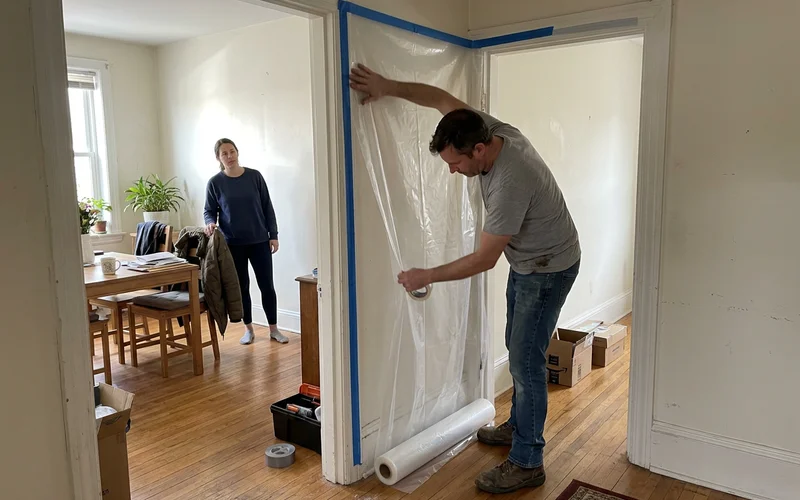
Containment walls are erected immediately at the doorway of the affected area to isolate biohazards from the rest of the property.
Our technicians run commercial negative air machines continuously so that heavily filtered air flows inward instead of outward.
Following infection control guidelines, these HEPA filtration systems must meet strict performance metrics:
- Air Exchange Rate: Units are configured to perform 12 to 15 air changes per hour (ACH).
- Filtration Standard: True HEPA filters capture 99.97% of airborne biological particulates.
- Directional Flow: Negative pressure ensures air never flows backward into clean hallways.
We rely on this mechanical pressure system to guarantee that severe odors never spread into your safe spaces.
These physical barriers prove especially critical in hoarding environments where dust and disturbed organic matter can quickly become airborne hazards.
Our clients frequently ask whether they must leave the house entirely during the cleanup phase.
The answer is usually no, as the containment zones keep the remaining living spaces completely safe.
We will provide honest guidance if a specific space requires temporary vacating, particularly during high-concentration ozone treatments for deep odor neutralization.
Property Access When You Cannot Be There
If you cannot be present at the property, cleanup teams coordinate remote access through a designated local representative or a secure digital lockbox.
Our records show a large share of unattended death projects involve family members who live out of state or who simply cannot face returning to the home.
Both scenarios are completely normal, and remote property management happens every day.
We gladly coordinate daily entry through whomever you designate, whether that is a neighbor, a real estate agent, a probate attorney, or the funeral director.
A simple communication schedule keeps everyone informed without requiring your physical presence:
- Morning check-ins: Confirming the start of the daily shift and the day’s goals.
- End-of-day progress: Providing a detailed recap of the completed work and visual documentation.
- Immediate alerts: Reaching out instantly if the crew uncovers unexpected structural issues.
Our trauma technicians are specifically trained to identify and rescue personal items, financial documents, and valuables hidden within hoarded materials.
These recovered belongings are carefully decontaminated, set aside, and returned directly to your representative rather than discarded into the waste stream.
Discretion Through the Whole Process
Professional remediation teams maintain absolute discretion by using unmarked vehicles and avoiding any public discussion of the incident.
Our standard operating procedure dictates staging a single service vehicle carefully where US street access allows, avoiding any disruption to local traffic flow.
Neighbors naturally become curious, but maintaining your privacy remains a foundational rule of professional biohazard recovery.
We enforce strict privacy protocols on every single job site:
- No branded workwear: Technicians wear unmarked clothing while walking on the sidewalk.
- No yard signage: We never place advertising materials on your lawn.
- No community chatter: Crews are barred from answering questions from neighbors or bystanders.
Individuals struggling with hoarding disorder already face intense anxiety regarding community exposure.
Our crews understand this sensitivity and work silently to keep the neighborhood completely unaware of the cleanup details.
This high level of privacy provides immense relief for a grieving family dealing with a highly visible tragedy.
We include this protective discretion at no extra cost, making it a non-negotiable standard for every single project.
Cost and Who Pays
Standard US homeowners insurance policies, particularly HO-3 special form policies, frequently cover the cost of unattended death cleanup.
We will not pressure you about financial arrangements until you are emotionally ready to discuss the billing process.
When that time comes, this comprehensive breakdown of who pays for unattended death cleanup in Ohio covers insurance details, estate responsibility, and victim assistance programs.
Our billing department regularly works with major carriers who classify biological fluid damage as a covered structural loss under the following conditions:
- Sudden and Accidental: The event must be an unforeseen tragedy rather than long-term neglect.
- Structural Damage: Coverage applies to fluids soaking into floors, walls, and built-in fixtures.
- Personal Property: Policies often include separate limits for cleaning or replacing contaminated clothing and furniture.
The short version is that homeowners insurance usually handles the heavy financial lifting, leaving the family responsible only for the standard policy deductible.
We coordinate the complex claim process directly with the insurance adjuster on your behalf to reduce your administrative burden.
A small initial deposit is usually all it takes to start the immediate remediation, ensuring the property does not deteriorate while waiting on a slow carrier decision.
Our goal is to stabilize your home safely, so please reach out to our 24/7 support line today to schedule an assessment and clarify exactly what happens after coroner releases scene.
Frequently Asked Questions
How soon can you start after release?
What do you do first when you arrive?
Do I need to be at the property?
How long will the property be unavailable?
Related Guides
How Decomposition and Odor Are Removed From a Property
How professionals remove decomposition and odor: fluid removal, subfloor sealing, hydroxyl and ozone fogging, air scrubbing, and odor verification.
What Happens to a Home After an Unattended Death
Understand what happens to a property after an unattended death, from decomposition and biological hazards to structural permeation and why the home is unsafe.
What to Do After Finding a Loved One Who Has Died at Home
A compassionate step-by-step guide after finding a loved one who has died at home, covering calling authorities, coroner release, funeral homes, and remediation.
Who Pays for Unattended Death Cleanup in Ohio?
Who pays for unattended death cleanup in Ohio: homeowners insurance, estate responsibility, victim-assistance programs, deposit terms, and claim help.
Learn more about Unattended Death Cleanup
If this guide described your situation, our unattended death service page walks through the full process, pricing, and what happens after you call.