
What to Expect When You Call a Biohazard Cleanup Team
What happens when you call a biohazard cleanup team: response time, discreet arrival, assessment, insurance coordination, and respectful communication.
Many families freeze when an older relative’s home reaches a severe Level 4 or 5 hoarding crisis. A 2024 report by the U.S. Senate Special Committee on Aging found that hoarding severity increases with each decade of life, leaving relatives overwhelmed by the conditions.
Our crews see this specific emergency unfold every single day.
The sheer volume of hazardous material makes it impossible for an untrained person to handle safely. Families need a concrete roadmap of what happens when they finally ask for help.
We designed this guide to explain exactly what to expect biohazard cleanup professionals to handle during a biohazard and trauma cleanup.
Understanding the process provides clarity and offers a few practical ways to manage the property immediately.
The Call Itself
When you dial a professional team, a live dispatcher answers immediately to gather basic facts and schedule a crew. This rapid two-hour biohazard response time is the standard operational benchmark across the United States.
Our helpline is staffed 24 hours a day, every day of the year, because these crises do not wait for business hours.
Most people calling biohazard cleanup specialists have never made a request like this before. You will speak to a real person, not an automated message service or a queue.
We only ask four specific things to get started.
These questions cover roughly what happened, whether local authorities have released the scene, the address, and if anyone is currently inside. That basic information allows the dispatchers to send the right equipment.
We never force you to describe traumatic details.
If your answer is simply that you cannot talk about that part, the dispatcher logs it as a complete answer and moves on. The checklist below outlines the required details for dispatch:
- General situation overview.
- Status of law enforcement clearance.
- Property type and address.
- Current occupancy of the affected space.
Our protocol respects your privacy at every stage.
What We Will Tell You to Do Right Away
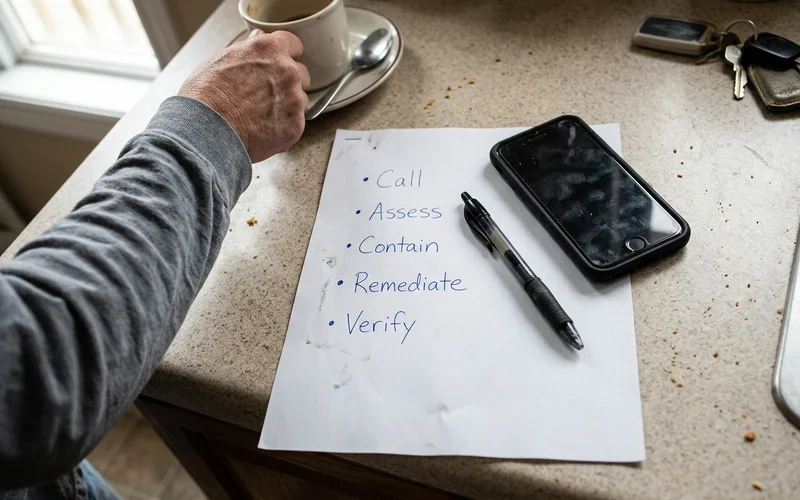
The immediate directive is to isolate the contaminated area by keeping everyone out and shutting down the HVAC system. You must avoid any DIY cleaning attempts until professionals assess the hazard.
Our dispatchers provide strict instructions before the crew arrives.
Pets and family members must stay entirely out of the affected room. Turning off the central air is critical if the thermostat is safely reachable.
We advise this because HVAC systems quickly circulate dangerous biological contaminants, like mold spores or aerosolized bacteria, throughout the entire house.
Untrained individuals should never attempt to clean the mess. Common household mistakes, such as pouring bleach on urine-soaked items, create highly toxic chloramine gas.
We also instruct callers to leave the windows closed.
Opening the space to air it out before a proper assessment can spread contamination to unaffected zones or violate Environmental Protection Agency containment guidelines. The table below compares safe actions with common hazards:
| Recommended Action | Dangerous Mistake | Reason |
|---|---|---|
| Turn off HVAC | Leaving AC on | Prevents airborne pathogen spread |
| Isolate pets | Letting animals roam | Stops physical cross-contamination |
| Keep windows closed | Airing out the room | Maintains controlled environment |
| Wait for professionals | Using bleach on waste | Avoids toxic chloramine gas creation |
Our primary concern is keeping you out of harm’s way.
Arrival and Discretion
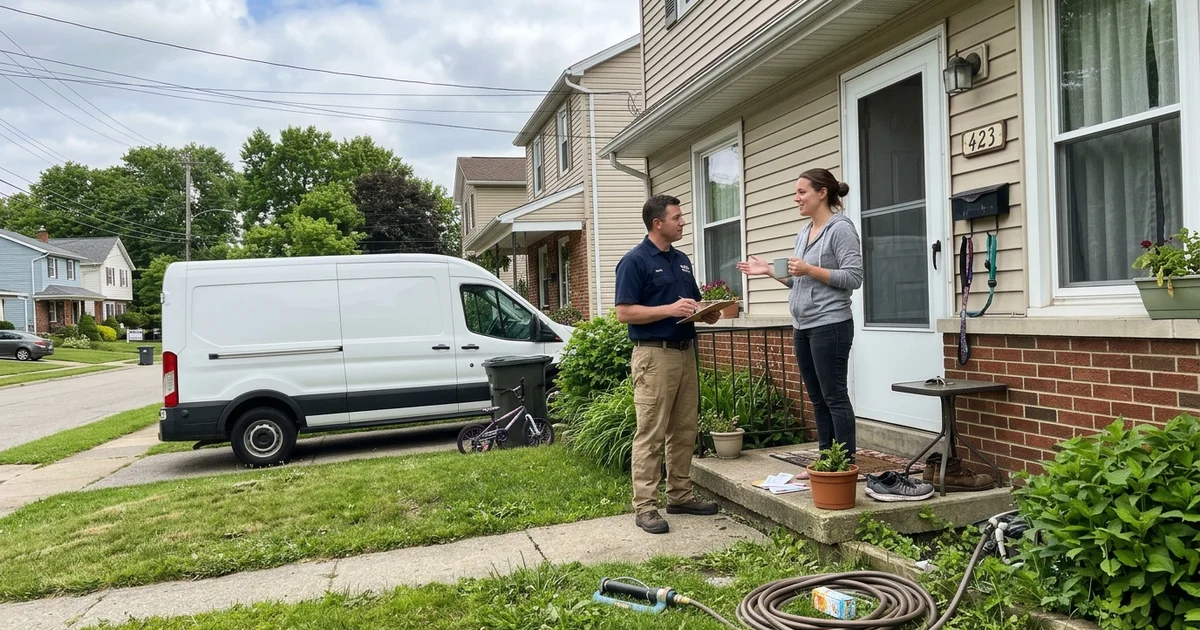
Technicians arrive in standard, unmarked vehicles to protect your privacy from neighbors. Crews stage equipment discreetly inside the property rather than displaying it on the front lawn.
Our team understands the stigma that sometimes surrounds severe hoarding or trauma events.
Neighbors often misinterpret a visible hazard response, leading to unwanted questions. Using common commercial vans, such as standard Ford Transits or Chevy Express models, prevents anyone from identifying the specific nature of the work.
We ensure there are no loud conversations or obvious chemical suits visible from the sidewalk.
This approach is not an expensive premium service tier. Privacy is a standard feature on every single job.
Our crews know that discretion is the detail clients care about the most during an overwhelming situation.
If street parking allows, a single vehicle is staged at a time rather than a highly visible convoy. Industry experts agree that maintaining neighborhood privacy reduces the emotional burden on families facing a crisis.
“Discretion is just as critical as the physical decontamination. Families dealing with hoarding disorder already face immense anxiety, and a public spectacle only makes it worse.”
We maintain this strict confidentiality from start to finish.
The On-Site Assessment
A certified technician maps the contamination levels to determine exactly what requires removal versus what can be salvaged. You receive a written scope of work and a fixed price before any labor begins.
Our project managers use the Institute for Challenging Disorganization (ICD) Clutter-Hoarding Scale to classify the severity of the environment.
Understanding the Written Scope
The detailed physical walk-through includes checking for fluid penetration below the flooring and behind the baseboards. The extent of structural absorption is the biggest single driver of both the final timeline and the total expenses.
We provide a clear, itemized quote based on these physical findings.
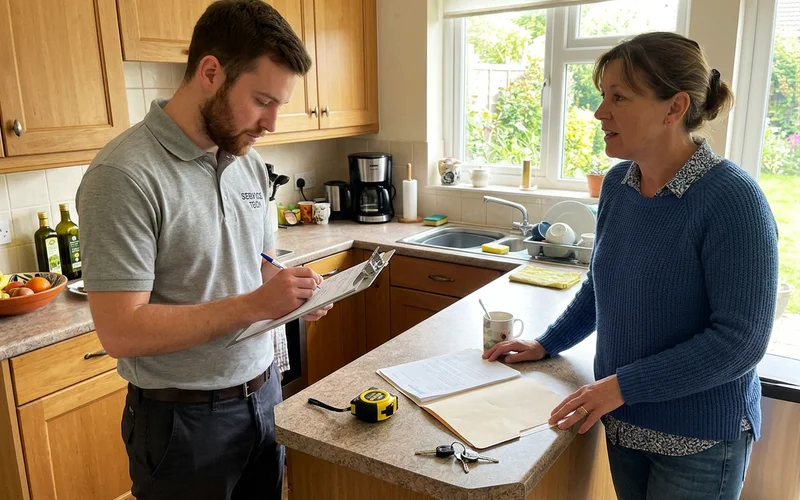
The initial document lists specific containment requirements, the materials slated for disposal, and the expected number of days on site. If the conditions turn out to be materially different once work begins, everything pauses.
Our estimates always clarify whether final scientific verification testing is included in the package.
A revised agreement must be signed before moving forward, meaning no surprise line items appear at the end.
We recommend reviewing local pricing factors so you are fully prepared.
If you are trying to budget before dialing the phone, biohazard cleanup cost in Ohio breaks down what actually drives the numbers.
Insurance, From the First Conversation
Standard HO-3 homeowners insurance policies generally exclude long-term hoarding accumulation, treating it as a maintenance issue. However, coverage often applies if the biohazard is triggered by a sudden covered peril, like a burst pipe or a localized fire.
We ask early in the process whether you want assistance coordinating with your insurance carrier.
The answer dictates exactly how the technicians document the job site. When coverage applies, the scope is itemized in the exact format that insurance adjusters require.
Our teams photograph the conditions thoroughly to build a strong evidence file for the claim.
Families do not have to wait on a final claim decision to begin the decontamination process. A small credit card deposit starts the work immediately, and the remaining balance is billed later.
We frequently see claims denied because families throw away damaged items before the adjuster arrives.
Documenting the structural damage is essential to proving the hazard was not just preventable clutter. The following events typically trigger an adjuster’s approval:
- Biohazards resulting from sudden sewage backups.
- Debris removal following a structural fire.
- Contamination caused by a burst plumbing line.
- Secondary damage from a severe weather event.
Our administrative staff handles this documentation directly to save you time.
How We Communicate During the Job
Clients receive a single, dedicated point of contact instead of dealing with a rotating cast of crew members. Daily progress updates ensure families stay completely informed from start to finish.
We provide clear status reports at the end of every working day.
If something unexpected changes the scope of work, you are notified immediately. Handling a cleanup for a relative out of state happens frequently, especially when older adults transition into assisted living.
Managing Out-of-State Logistics
Our logistics coordinators can manage property access remotely.
A hidden keybox or coordination with a neighbor, realtor, or attorney keeps the project moving smoothly. Funeral homes can also facilitate access in cases of unattended passings.
We send detailed photo logs directly to your phone or email.
These visual reports mean you are never guessing about the progress being made inside the house. Remote management requires immense trust, and transparency is non-negotiable.
Our daily check-ins eliminate the stress of distance.
After We Finish
The final step is a comprehensive walk-through to review the restored space, though a written summary is provided if you prefer not to enter. You will receive all verification results and legal waste disposal records for your files.
We guarantee the environment is safe through scientific verification testing.
Technicians often use Adenosine Triphosphate (ATP) swab testing to prove that zero biological contamination remains on the surfaces. State laws mandate strict tracking of hazardous waste, so the final packet includes the official disposal manifests.
Our priority is giving you full control over the property once it is safe.
The final handover packet includes several critical documents:
- Scientific verification testing results.
- Certified medical waste disposal manifests.
- A detailed completion summary.
- The itemized final invoice.
You decide what happens next with the property. The timeline for those next steps is entirely up to you, not the cleanup crew.
We remain available to answer questions long after the final invoice is paid.
Clear documentation protects the property value and provides peace of mind for the entire family. Knowing what to expect biohazard cleanup professionals to provide at the end gives you confidence.
If you are facing an overwhelming situation, contact a certified professional today to discuss your options.
Frequently Asked Questions
How fast can you respond?
Will you arrive discreetly?
What will you ask me on the phone?
Do I have to decide anything on the first call?
Related Guides
How Much Does Biohazard Cleanup Cost in Ohio?
What drives biohazard cleanup cost in Ohio, from labor and medical-waste poundage to containment, plus insurance coverage and deposit terms.
The Biohazard Remediation Process Step by Step
See the full biohazard remediation process: assessment, containment, removal, EPA-registered disinfection, ATP verification, and clearance documentation.
Fentanyl and Drug Residue Decontamination
Safe fentanyl and drug-residue decontamination in Cincinnati for landlords, buyers, and first responders, covering surface contamination risks, PPE, and verification.
Is It Safe to Clean Up Biohazards Yourself?
Why DIY biohazard cleanup is dangerous, covering bloodborne pathogens, cross-contamination, respiratory hazards, and legal liability, and when to call professionals.
Learn more about Biohazard & Trauma Scene Cleanup
If this guide described your situation, our biohazard cleanup service page walks through the full process, pricing, and what happens after you call.